Canada-Focused Social Sciences Studies in South Korea: A 20-Year Scoping Review
Received: 2025-09-15 ; Accepted: 2025-11-30
Published Online: 2025-12-31
Abstract
This paper shows a scoping review of the Canada-focused social sciences articles published through the Korea Citation Index (KCI) journals for the last 20 years; it mapped out a broad field of evidence on Canadian studies in the KCI social sciences domain, thereby identifying critical research gaps within the bilateral academic collaboration. Using a descriptive coding technique of ChatGPT 4o, a Generative Artificial Intelligence service, this scoping review classified 211 KCI articles, followed by analyzing 15 attributes of the selected literature. As such, it unearthed from the knowledge synthesis that (i) Korean authors overwhelmingly led Canada-related studies by a single research form, with limited international collaboration; (ii) Overall topics shifted from free trade-centered issues to multiculturalism, education, criminal, and climate challenges; (iii) publications predominantly used the Korean language and descriptive methods, limiting global academic visibility; and (iv) major knowledge gaps were identified in indigenous issues, Francophone perspectives, immigrant voices, and policy feedback analyses. This study may contribute to more prosperous scholarly activities of Canada-related social science researchers/ practitioners in the Canadian-Korean context.
본문
INTRODUCTION
Since the 20th century, strategic relationships between Canada and South Korea (hereinafter, Korea) have been overwhelmingly positive, given Canadian missionary engagements in Korea, Canada’s participation in the Korean War, Canadian-Korean economic interests, Koreans immigration to Canada, and academic interchange between the blood ally (Park, 2018; Sullivan, 2020; KoreaNet, 2023; Government of Canada, 2024). In accordance with such mutually beneficial collaborations at the higher education level, there are many international exchange and partnership programs in Canada/Korea (Korean Consulate General Toronto, 2024). As a result, numerous Korean doctoral graduates turn out from Canada-based higher education institutes year by year. According to the doctorate registration system operated by the Ministry of Education, Korea, the number of Ph.D. holders from Canadian post-graduate schools appears to be the seventh biggest among all Korean doctorates from overseas universities (National Research Foundation of Korea, 2025). Nonetheless, published academic studies in the context of Canada-Korea are rarely seen around the Korean social sciences arena compared to extensive attention to other Western countries, while the two partners have demonstrated longstanding cooperation, including people-to-people scientific interchange and diverse cultural exchanges, in many fields and disciplines over the six decades (Lee, 2014; Canadian Heritage, 2024).
In these situations, this scoping review study in the form of systematic classification is designed to (i) provide a synthesized overview of social sciences research focused on Canada from the Korean/Canadian academia, (ii) identify the existing knowledge covered in the Korean national journals and (iii) offer a better understanding of the research gap from the categorized evidence to scholar and practitioners whose research interests are related to Canadian studies. In a bid to achieve those aims, a primary question is proposed as follows: What do Canada-focused papers in the Korean social sciences literature deal with? Based on the overarching question, the four sub-questions are mainly formulated in line with the PCC (Participant-Concept-Context) framework of Pollock et al. (2021) that is used for scoping review studies:
RQ2. Concept: What are the trends, topics and areas shown in the research?
RQ3. Context: What are the languages, citations and methods used in the papers?
RQ4. Knowledge gap: What are the core gaps in knowledge behind them?
This study will make a bilateral contribution to engaging our wider attention to social sciences research in accordance with the Canada-Korea partnership programs, improving the academic exchanges locally/regionally between the two countries, and promoting more expanded scholarly initiatives among Canada-focused researchers.
Rationale of the Study
In recent years, the bilateral relationship between Canada and Korea has evolved into a Comprehensive Strategic Partnership, emphasizing collaboration across various sectors, including diplomacy, security, economy, and education. This partnership was underscored by the Action Plan implemented by both nations, aiming to strengthen ties and mutual understanding (Government of Canada, 2024b). Since then, strategic research collaborations at the higher educational level between the two countries have been pivotal in this evolving relationship; as a result, the three-year agreement between Mitacs of Canada and National Research Foundation of Korea facilitates research internships, promoting industrial innovation, academic exchanges and joint initiatives. Such multidisciplinary programs not only enhance engineering cooperation but also foster cultural understanding and knowledge exchange from innovative research (Mitacs, 2016). More recently, on an economic dimension, both countries have initiated collaborative industrial research and development programs by encouraging small/medium-sized enterprises to engage in joint projects with high commercialization potential. These programs are primarily supported by organizations like the National Research Council of Canada, which provides funding and advisory services to facilitate international collaborations (Government of Canada, 2019; 2025).
Both Canada and Korea would benefit from an extended study on each side, as multiple Canadian universities have managed Korean Studies centers, and the Korean language is taught in a wide range of schools in Canada (Coates, 2017). However, despite these advancements across industries and government institutes, there remains a noticeable gap in social sciences studies focusing on the Korea-Canada academic relationship. While technological, economic, and scientific technique collaborations are well-documented, studies exploring socio-cultural dynamics, sociological processes, public perceptions, and policy impacts between the two nations are relatively limited (Sullivan, 2020). Addressing this academic gap may be crucial for a holistic understanding of long-lasting bilateral relationships, for the body of knowledge on social issues is steadily growing within a globalized complex society. Meanwhile, recent initiatives sponsored by the Academy of Korean Studies (AKS) at a Canadian University emphasize the importance of exploring democratic politics, popular culture, and everyday life in Korean studies. Integrating such perspectives into Korean-Canada research can provide deeper insights into the societal underpinnings of the bilateral relationship (York University, 2018). Likewise, Canada and Korea continue to strengthen their many-sided partnership because there is an imperative need to expand social sciences studies by developing research platforms that bring together scholars from multiple faculties and preparing third-party funding opportunities that delve into the humanistic and societal aspects of this relationship (KOFICE, 2019; CEFIA, 2024). Such research front driven by social sciences Canadianists in both countries will not only complement existing the bonds of friendship but also contribute to a more comprehensive and nuanced understanding of the ties that bind these two nations (Coates, 2017).
Methodology
A scoping review method is considered to undertake a broad field of evidence synthesis of the classified literature (Pollock et al., 2021). Scoping reviews, also known as scoping studies and mapping studies, give an overview of specific domains through a systematic classification (Petersen et al., 2015). From a post-modern point of view, scoping studies involve searching the relevant literature by category to identify what topics are covered in the research areas mapped to a classification (Lee & Cho, 2021). Such categories used in a scoping study are based on publication information (e.g., fields/affiliations of the authors, publication source, research type, and core topics) as well as abstract/descriptions on the research methods used. Scoping reviews differ from systematic literature reviews, aiming to consider the strength of evidence and a comprehensive understanding of findings in that they primarily focus on classifying the type of research, structuring a research scope, and responding to a set of high-level research questions (Petersen et al., 2015). The literature review method also has a key feature that relies on visualization techniques in presenting findings and aggregating the evidence (Kitchenham et al., 2011).
This work utilizes a well-organized procedure of literature collection strategies, AI-driven analytic tools and results presentation suitable for scoping reviews, as depicted in Figure 1 that ranges from selecting the literature data pool to discussing the knowledge synthesis and the presentation of results (Lee & Cho, 2021). To secure generalizability at most, data collection and data analysis activities that this study adopted in January and February 2025 were demonstrated by multiple scoping studies that Kitchenham et al. (2011), Petersen et al. (2015), and Lee and Cho (2021), and undertook and generated by artificial intelligence (AI) services. For data collection, the researcher entered a single keyword as “Canada” in Korean syllables (i.e., ) on the search window of the Korea Citation Index website (www.kci.go.kr, KCI), and then clicked seven options on the publication information, including ‘social sciences’ as journal types and ‘from 2005 thru 2024’ as published year, to screen relevant research papers used for the study.

As a result of the high-level search, the work included 211 pieces of literature, except for four non-academic articles from the initial 215 listings. Next, to extract informative bibliographic data in the RIS format that is compatible with EndNote/Zotero Reference Management Software, this study activated 15 bibliographic filtering boxes available on the search page, followed by downloading RIS-formatted files multiple times from the KCI’s database. As shown in Figure 2, all 15 attributes of the standard bibliographic information were imported to the Zotero program and the MS-Excel 365 program. Four fields of English-written names, titles, abstracts, and keywords in a simple text layout were then selected for the systematic classification stage. Lastly, this researcher utilized ChatGPT 4o to analyze text data in a time-effective manner; the Generative AI’s Large Language Model (LLM) engine enabled us to run qualitative descriptive coding methods in analyzing a large volume of the documentary data, followed by a valid and reliable Non-negative Matrix Factorization (NMF) method from ChatGPT 4o (see Appendix).
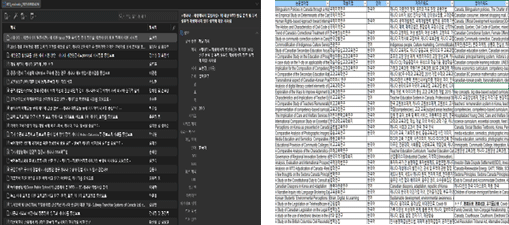
By interpreting the structured outputs made by ChatGPT’s descriptive coding jobs, knowledge synthesis in accordance with Kitchenham et al.’s (2011) and Petersen et al.’s (2015) guidelines on scoping studies, and presentation of the evidence primarily in a tabular format were carried out.
Findings
As mentioned, a total of 211 KCI Canada-focused papers within social sciences are selected to highlight the results, including research trends, institutional affiliations, topical shifts, research focus, research patterns, and methodology spectrum, as well as to identify key findings on gaps in knowledge.
This study looks over temporal trends in publication. To understand the trends in Canada-related studies, it classified the selected papers based on publication year. Figure 3 depicts the publication trend across the time period; the paper counts are grouped into 5-year periods as 2005~2009, 2010~2014, 2015~2019, and 2020~2024. Here, we may easily discover that the amount of research increases by the classified period.
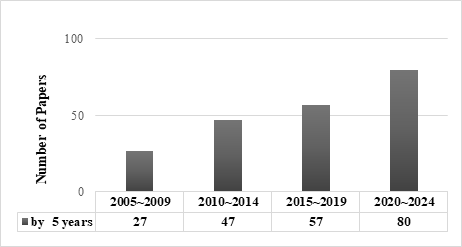
Publication rates have increased from 27 pieces in 2005~2009 to 80 pieces in 2020~2024; the number of papers has nearly tripled in 15 years, indicating gradually growing academic interest in Canada between the two countries. However, this quantitative rise masks a qualitative stagnation in the diversity of topics or methods, as revealed in later sections. Judging from the full English name of the first authors, this scoping study is able to look into the national dynamics of authorship (See Table 1). Among 211 primary authors, 194 Koreans occupy while 17 pieces are made by non-Koreans, including 15 pieces by Canadian (or Westerners) and two pieces by Chinese authors; Korean authors dominate the literature in social sciences, accounting for nearly 92% of the studies. Only a handful of Canadians make up less than 8% of the total, and two Chinese contributors are represented. These figures clearly show a mono-directional knowledge flow, where Korean perspectives shape the entire discourse on Canada-related social issues. While this demonstrates active Korean scholarly engagement, it also reflects a missed opportunity for co-authored transnational scholarship, limiting the dialogic nature of bilateral studies.
| Nationality | Korean | Canadian(Western) | Chinese |
| Papers | 194 (91.9%) | 15 (7.1%) | 2 (1.0%) |
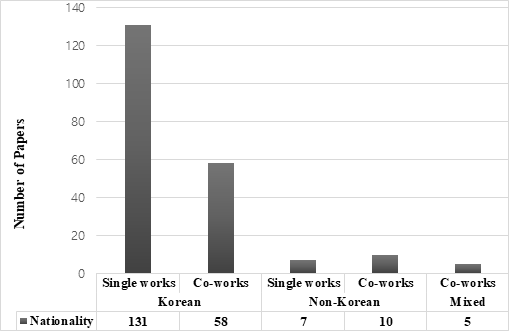
More specifically, this study investigates the work’s form combined with the citizenship of the first author. The number of sole authors is 138 pieces (65.4%), and the number of co-authors is 73(=58+10+5) pieces (34.6%). It appears that Korean authors prefer single works indeed, whereas non-Koreans would rather go with collaborations (see Figure 4).
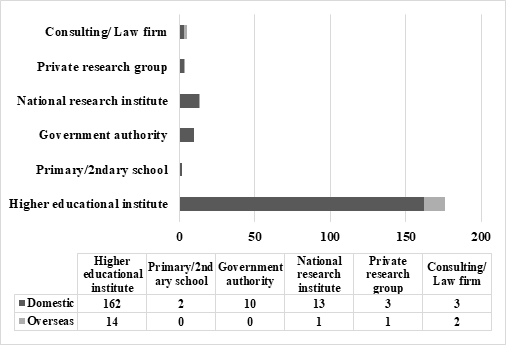
Understanding the distribution of institutional affiliations is crucial; the information gives us authors with resources, support and research impact. Figure 5 illustrates that nearly 162 over 211 (77%) originate from universities/post-graduate schools in Korea, with minimal contributions from overseas, national research centers, or governmental bodies. This institutional concentration implies predominant academic insulation—social sciences research on Canada is conducted largely within Korean universities, with little engagement from practitioners or cross-sector actors such as legal firms, private research groups, or individual researchers with primary/secondary schools.
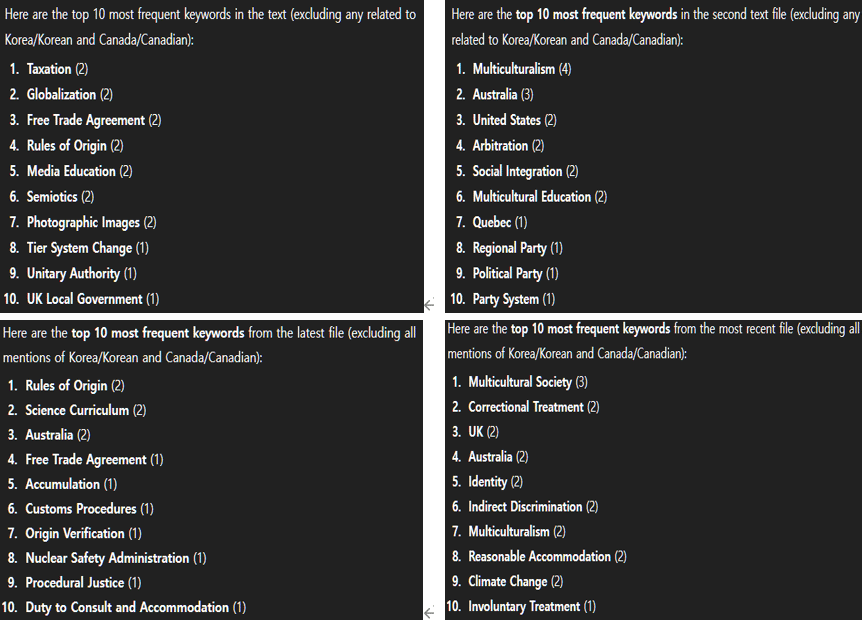
For this review, as shown in Appendix A, ChatGPT-assisted descriptive coding reveals evolving topical emphases after analyzing three text datasets in the columns of all keywords in English to identify significant shifts by topic shown by five-year periods:
- 2005~2009: Free Trade Agreement (FTA), globalization, and bilingual policy
- 2010~2014: multiculturalism, education, and social integration
- 2015~2019: legal frameworks, customs, and curriculum
- 2020~2024: criminal justice, discrimination, and climate change
Compared to the above topical shifts that AI-assisted descriptive coding undertook, this research manually searched the most frequent words apart among the keywords by grouping five years on MS Excel, using the spreadsheet’s built-in ‘find’ (i.e., search) function. As a result, as Table 2 suggests, it can be confirmed that this timeline captures a similar Korea’s shifting interest between the two analytic methods(i.e., by AI-assisted and handwork)—from macroeconomic ties and trade agreements to social justice issues such as correctional treatment and discrimination, mirroring broader global academic trends.
| Major topics by 5 years | 2005~2009 | 2010~2014 |
| Taxation Globalization Free Trade Agreement (FTA) Media education |
Multiculturalism Social integration Multicultural education Political system | |
| 2015~2019 | 2020~2024 | |
| Rules of origin Science curriculum Customs procedures Criminal conduct | Multicultural society Correctional treatment Indirect discrimination Climate change |
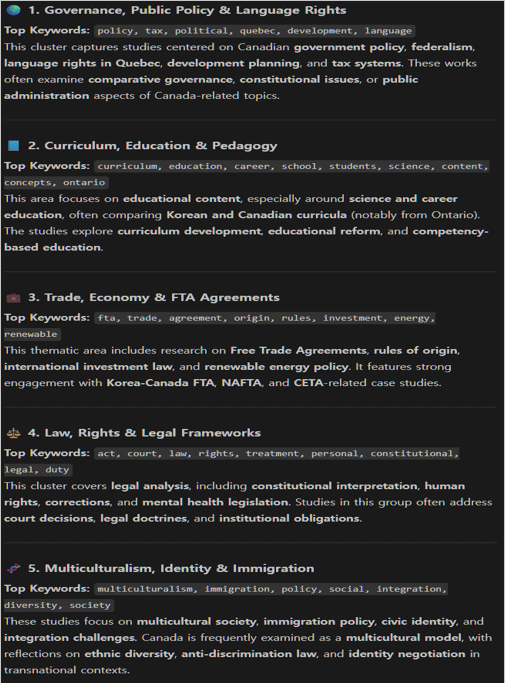
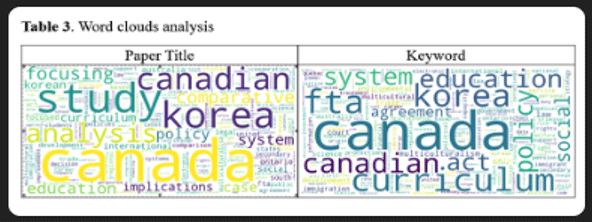
This mapping study also undertakes a twofold word cloud analysis corresponding to titles and keywords of 211 articles, followed by a thematic cluster based on 211 abstracts using ChatGPT’s NMF technique (see Appendix B), around five core research areas as illustrated in Figure 6 and Table 3, respectively.
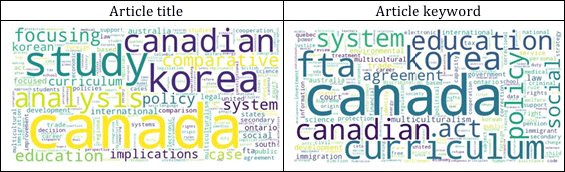
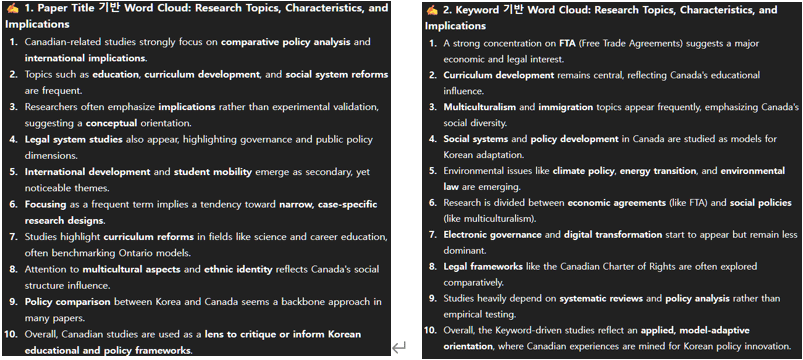
First, in regard to article titles, research highlights are addressed as follows. Education, curriculum development, and social system reforms are frequent topics. Legal system studies appear as well, highlighting governance and public policy dimensions. International development and student mobility emerge as secondary yet noticeable themes. Studies highlight curriculum reforms in fields such as science and career education, often benchmarking Ontario models. Attention to multicultural aspects and ethnic identity reflects Canada’s influence on social structure. Policy comparison between Korea and Canada seems a backbone approach in many papers. Overall, Canadian studies are used as a lens to critique or inform Korean educational and policy frameworks.
| Research areas: Governance, Public policy, Language rights | |
| Key morphemes | Focus on the research |
| policy, tax, political, development, language, Quebec | This cluster captures studies centered on Canadian government policy, federalism, language rights (particularly in Quebec), political systems, development planning, and tax systems. Therefore, these works often examine comparative governance, constitutional issues, or public administration aspects of Canada-related topics. |
| Research areas: Curriculum, Education, Pedagogy | |
| Key morphemes | Focus on the research |
| curriculum, education, career, school, students, science, Ontario | This arena focuses on educational content, especially around science and career education, often comparing Korean and Canadian curricula (notably from Ontario). The studies explore curriculum development, educational reform, and competency-based education. |
| Research areas: Trade, Economy, Free Trading | |
| Key morphemes | Focus on the research |
| FTA, trade, agreement, origin, rules, investment, energy, renewable | This thematic area includes research on Free Trade Agreements, rules of origin, international investment law, and renewable energy policy. It features strong engagement with Korea-Canada FTA, NA(North America)FTA, and CETA(Comprehensive Economic and Trade Agreement)-related case studies. |
| Research areas: Law, Rights, Legal Frameworks | |
| Key morphemes | Focus on the research |
| act, court, legal, rights, treatment, personal, law, constitutional | This cluster covers legal analysis, including constitutional interpretation, human rights, corrections, and mental health legislation. Studies in this group often address court decisions, legal doctrines, and institutional obligations. |
| Research areas: Multiculturalism, Identity, Immigration | |
| Key morphemes | Focus on the research |
| multiculturalism, immigration, policy, social, integration, diversity, society | These studies deal with multicultural society, immigration policy, civic identity, and integration challenges. Canada is frequently examined as a multicultural model, with reflections on ethnic diversity, anti-discrimination law, and identity negotiation in transnational contexts. |
Then, pertaining to keywords in the papers, an intense concentration on FTA suggests a major economic and legal interest. Curriculum development remains central, reflecting Canada's educational influence. Multiculturalism and immigration topics appear frequently, emphasizing Canada's social diversity. Social systems and policy development in Canada are studied as models for Korean adaptation. Environmental issues, such as climate policy, energy transition, and environmental law are emerging. Electronic governance and digital transformation have started to appear but remain less dominant. Legal frameworks like the Canadian Charter of Rights are often explored comparatively. Continually, based on 211 abstracts, Table 3 provides outputs of the thematic cluster around five research sectors supported by ChatGPT’s NMF service. The first research areas are primarily related to governance and policy, with an emphasis on Canadian federalism, tax law, and Quebec’s language rights. While these studies suggest a comparative constitutional interest in the region, they do not deeply engage with Canadian public administration theory. The second domain contains education and pedagogical-related topics, with a focus on curriculum comparison between two countries, often benchmarking Ontario as a meaningful policy reference. This cluster is methodologically diverse but usually lacks policy-to-practice linkage. The third case relates to the matter of international trade, which FTA is involved in, and in this domain, economic issues are also addressed; such writings also provide detailed information on NAFTA/CETA implications and rules of origin, but they often neglect supply chain policy or the dynamics of green trade. The fourth research groups are within legal systems and human rights; topics range from indigenous legal rights to mental health justice, yet few studies integrate indigenous epistemologies or intersectional legal critiques. Lastly, multiculturalism and identity are also key research areas; the focus of the research reflects growing attention to Canada’s multicultural model, often in contrast to Korea’s monoethnic narrative. However, few works examine diasporic identity formation or lived immigrant experience, despite the fact that there are more than 240 thousand Korean immigrants living in Canada nationwide (Korean Consulate General Toronto, 2024).
As Table 4 shows, as for linguistic patterns, a striking 86% of papers (181 pieces) are written in Korean, with only 13% in English. This presents a linguistic silo that limits international accessibility and cross-border citation, inadvertently isolating Korean perspectives from broader Canadianist discourse. Besides, Table 5 shows that in terms of citation frequency, over 90% of papers (191 over 211) are cited fewer than 10 times, and a full 30% are never cited. While citation metrics are not definitive markers of quality, this suggests that Canada-related research in Korea remains marginal in academic influence and may lack disciplinary integration.
| Languages | Korean | English | Korean-Chinese | Korean-Japanese |
| Papers | 181 (85.8%) | 27 (12.8%) | 2 (0.95%) | 1 (0.5%) |
| Citations | 100+ | 20~49 | 10~19 | 1~9 0 | |
| Papers | 1 (0.5%) | 7 (3.3%) | 12 (5.7%) | 128 (60.7%) | 63 (29.9%) |
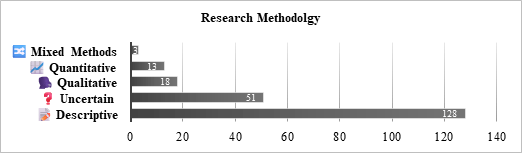
Lastly, methodological approaches are depicted in Figure 7. The research methods applied in the literature are predominantly descriptive or unclear, with only a minority using rigorous qualitative, quantitative, or mixed-method basis. As international social sciences literature, this methodological underdevelopment signals an urgent need for deeper empirical engagement, including fieldwork, ethnography, and data modelling.
This scoping review indicates some key holes in knowledge and academic voids. First, co-authored intercultural studies between researchers in the two nations are insufficient, which creates a highly one-sided academic debate. Second, indigenous Canadian issues have received little attention across Korean scholarly outputs, showing a notable blind spot in researching the multidimensional societal structures within Canada. Third, Francophone Canada is systematically underrepresented in the studies reviewed, despite being deeply embedded in shaping the cultural and political landscape of the nation. Fourth, there is a lack of policy feedback analyses that explore how Canadian models may inform policy innovation or reform processes in Korea. Fifth, the marginalization of immigrant voices, and the limited use of ethnographic inquiry, seriously limit the depth and authenticity of multicultural and societal studies. Last but not least, cross-sectoral engagement including lawyers, NGOs, and government officials remains limited making it difficult to achieve the interdisciplinary scope through which to understand Canada-Korea relations.
Discussion
This scoping review aimed to categorize and interpret systematically the literature of Canadian-focused social sciences studies published in Korea in the past 20 years. In concert with the overarching research question (i.e., What do Canada-focused papers in the Korean social sciences literature deal with?) and with four sub-questions discussed as above in the introduction, the discussion weaves together the findings around participants, conceptual trends, contextual characteristics, and gaps in knowledge.
Results disclose a remarkable dominance of Korean scholars conducting research on subjects associated with Canada in Korean social sciences journals. Roughly 92% of the initial authors were Korean nationals, and the study involved a few Canadian and foreign scholars. Also, the preference among Korean researchers for single authors is in contrast to the collaborative tendency of non-Korean authors. This indicates that most Canadian-focused research done in Korea is rooted in the domestic sphere, devoid of significant intercultural or binational scholarship (Coates, 2017; Sullivan, 2020). Consequently, the field risks an inward-looking orientation, missing opportunities for comparative depth and intercultural enrichment that joint authorship could provide.
Even though the number of Canada-related articles in papers increases yearly, the trends over the 20-year time period also show topic change in theme evolution, as we look at the evolution of thematic focus over time, the years. The earlier papers, for example, stressed that Korea’s focus became focused on macroeconomic themes like Korea-Canada FTA, NAFTA, CETA, and globalization (e.g., trade priorities). In the mid-2010s, multiculturalism, education reforms, and governance structures became the leading themes. And in another instance, the discourse grew to encompass criminal justice, correctional reform, discrimination, and climate change. A handful of articles have recently demonstrated how Canadian experiences are mined for Korean policy innovation. In particular, thematic clusters identified from word-cloud analysis and the NMF method were all governance, education, economy, law, and multiculturalism. However, the coverage remains superficial, with very little interdisciplinary depth or theoretical diversity, even with these added subjects.
The overwhelming use of the Korean language (approximately 86% of the papers) underscores a linguistic silo that restricts the international accessibility and visibility of Korean research on Canada. Citation analysis further reveals a low impact, with over 90% of articles cited fewer than 10 times, and nearly 30% remaining uncited. Such patterns suggest an insular academic ecosystem, where research is mostly disseminated within a country’s borders, without international connections. Methodologically, the literature is dominated by descriptive or uncertain approaches, and few studies have undertaken strong qualitative, quantitative, or mixed methods designs. This methodological conservatism suggests a need for enhanced empirical sophistication, including the adoption of ethnography, longitudinal analysis, or policy modeling.
This study pinpoints a number of key gaps in the existing body of work. There is a striking absence of intercultural co-authored scholarship, leaving scholars with little scope for comparative or dialogical insights. In Canada, Indigenous issues have received relatively low attention, and there is very little written on the intricacies of Canadian society. Francophone Canada is significantly neglected, despite its substantial cultural and political importance. Moreover, there is an absence of research that analyzes how Canadian experiences could inform Korean policy or societal reforms. We can also address that the voices of the Canadian local immigrants, as well as ethnographic perspectives, are scarce, resulting in a lack of grounded insights into multicultural realities and not long-lasting relationships between the Korean communities/institutes in Canada (Moon, 2003; Hong, 2020). Finally, minimal cross-sectoral participation from Koreans suggests an urgent need for interdisciplinary collaboration across academia, law, policy and non-governmental organizations in civil society sectors where Canada is one of the supportive Western countries in terms of international human rights and freedom as well as feminist foreign policy (Sohn, 2011; Seol, 2022; Choi & Kwon, 2023). In summary, while Canada-focused research formally published in the KCI journals has expanded quantitatively over the last two decades, qualitative limitations persist, however. Addressing these gaps will require a deliberate pivot toward intercultural collaboration, methodological rigour, thematic diversification, and global scholarly dialogue.
Conclusion and Implications
This scoping review presents the first comprehensive mapping of Canada-related social sciences research that is introduced in the Korean/Canadian academia over the past twenty years. It documents the gradual but clear growth of scholarly interest in Canada, reflected in the increasing number of publications, expansion of topical diversity, and evolving research themes aligned with broader global academic trends. Despite these quantitative advances, the study reveals persistent structural limitations in the selected 211 KCI literature. There is a significant domestic authorship dominance with scant cross-border collaboration. While the research themes have expanded, their thematic and methodological scope remains constrained and tends to be more descriptive in nature, with relatively little depth in theoretical or empirical contribution. Furthermore, the linguistic barrier posed by Korean-only publications, combined with low citation visibility, suggests a restricted global academic impact. In addition, research is largely divided between economic agreements (FTA) and social policies, including multiculturalism and social integration. Studies are also heavily dependent on a simple literature review, comparative policy analysis, and international implications rather than empirical testing. Such works may emphasize arbitrary results or individual judgment rather than experimental validation, not suggesting a conceptual orientation; this is mainly because focusing on a frequent term from research titles and abstracts implies a tendency toward narrow, case-specific research designs.
The identification of significant knowledge gaps—particularly the neglect of indigenous issues, Francophone perspectives, immigrant experiences, and policy feedback mechanisms—highlights critical areas for future inquiry. To cultivate a more robust and globally relevant body of Canada-focused research, Korean scholars must actively pursue intercultural co-authorship, interdisciplinary methodological frameworks, and bilingual publication strategies. Engaging with Canadian scholars, institutions, and diverse communities can significantly enrich the quality, relevance, and global connectivity of future studies. Practically, this study implies that academic institutions, research funding bodies, and policymakers should incentivize collaborative research models, support the development of bilingual research outputs, and facilitate cross-sectoral dialogue. In doing so, they can not only deepen the scholarly understanding of Canada-Korea relations but also contribute to the creation of an inclusive, dynamic research ecosystem that resonates with both domestic and international audiences.
In conclusion, while Canada-related research within Korean social sciences journals has made promising strides, its true potential remains untapped. A conscious, strategic shift toward intercultural, interdisciplinary, and globally engaged scholarship is necessary to foster a richer, more nuanced understanding of the Canadian experience and its relevance to Korean society. This paper, in the form of a scoping study that concentrates on classifying research types, structuring a research scope and providing knowledge synthesis by responding to a set of high-level, has a limitation in that it does not cover the in-depth evaluation nor critical appraisal of all relevant literature on the specific boundary that systematic literature reviews generally do. Thereby, while the present scoping review successfully classified overarching trends and thematic concentrations in Canada-focused social sciences research, it primarily adopted a descriptive mapping approach rather than undertaking a critical meta-synthesis; the study was limited in its ability to infer deeper theoretical implications, causal linkages, or paradigm shifts within the field, which would have enriched the interpretative depth of the findings. Therefore, this study serves as a foundation for future research initiatives that can be built to achieve that vision further and will contribute to more prosperous scholarly activities in the Canadian-Korean context.
Statements of Artificial Intelligence (AI) Usage
In line with the research design and methods as specified in 3. METHODOLOGY, this scoping study widely employed a Generative AI tool, ChatGPT 4o to conduct descriptive coding, analyze a large volume of textual dataset, and produce the mapped outcomes (i.e., major topics, word cloud and thematic cluster on page 8-9/17-18), as well as Grammerly, an AI writing assistant to support semantic refinement, textual coherence, and grammatical correction in the manuscript; all AI-generated coding/analyzing skills and AI-assisted outputs in writing were thoroughly reviewed, evaluate, and where necessary, modified by the author to ensure consistency, accuracy, clarity, and originality in accordance with academic standards of scoping review.
REFERENCES
1.

2.
3.
4.
5.
6.
7.
8.
9.
10.
11.
13.
14.
15.
16.
17.
18.
19.
20.
21.
22.
23.
24.
25.
26.
APPENDIX
[Prompt] What is the most top-10 frequent keywords, except for Korea/Korean as well as Canada/Canadian in the attached text of the 4 different files?
[Prompt] Referring to the attached beta word cloud, explain the subject, characteristic, and implication of Canadian studies in 10 lines each according to the two images, with the exception of the four insignificant morphemes--e.g., Canada, Canadian, Korea, Study, and Analysis.
[Prompt] Using the attached is a list of 211 studies, summarize the scope of knowledge of 211 papers into "5 clusters" based on the descriptive coding method for column F (the thesis English name), column J (English keyword), and column K (English abstract) in the spreadsheet.