Canada and Mexico Relations in a Changing North American Landscape
Received: 2025-10-30 ; Accepted: 2025-12-10
Published Online: 2025-12-31
Abstract
We investigated the challenges faced by internationally trained immigrants’ (ITIs) social and cultural integration in Northern Ontario, Canada. In-depth face-to-face interviews were conducted with 74 ITIs, immigrated to Canada within the past 10 years and living in a Northern Ontario community for a minimum of six months. Results show their eexpectation prior to arrival in Canada were overly optimistic, based on word-of-mouth referrals from friends, family, and former immigrants but underestimated the requirement for Canadian credentials and lacked preparedness for social integration, language skills, cultural awareness and networks. Perceptions reported include greater access to transportation, language training, employment and settlement services for newcomers was required in Northern Ontario as compared to larger cities. Participants felt they were better able to integrate when they prepared from their home country, attended a Canadian educational institution, or had a network of family and friends for support. Findings have policy relevance at the federal, provincial and community level and may be extended to other Canadian cities
본문
INTRODUCTION
The bilateral relationship between Mexico and Canada represents a significant partnership within the North American geopolitical and economic realms. Forged over eight decades of formal diplomatic engagement and renovated by the advent of the North American Free Trade Agreement (NAFTA) in 1994, this partnership has evolved from a diplomatic connection to an association characterized by deep economic integration, institutionalized labor mobility, within complex regional dynamics.
This article examines the evolution of this relationship, arguing that, at the present time, it is undergoing a critical phase of strategic redefinition, moving to its own distinct agenda. In the bilateral relationship, the Seasonal Agricultural Worker Program (SAWP) has been recognized by one of the world’s most established and managed temporary labor migration programs. Established in 1974, the SAWP is a paradigm of state-led, circular migration that supply Canadian agricultural labor demands with Mexican temporary workers.
More recently, the renegotiation and implementation of the USMCA in 2017-2020, updated the rules of free trade, introducing novel chapters on digital commerce, labor rights, and environmental standards. However, the return of protectionist trade policies under the second Trump administration in the United States (2025-2029), manifested in unilateral tariffs and rhetorical challenges to the USMCA framework, has introduced uncertainty and volatility into North America.
This external pressure has served as a forcing mechanism for Ottawa and Mexico City, inducing closer bilateral coordination, as can be seen in the Mexico-Canada Action Plan (2025-2028), signed in September 2025. The plan articulates a four-pillar agenda including Prosperity; Mobility, Inclusion, and Well-being; Security; and Environment and Sustainability.
Therefore, this article seeks to analyze the Mexico-Canada relationship at this crucial moment. It will explore the historical foundations laid by NAFTA, USMCA and the SAWP, assess the current economic and diplomatic contours of the partnership, and evaluate the prospects and challenges inherent in the new Action Plan. The article contributes to broader understandings of North America as a region, economic relations, and the strategies of both countries in an era of geopolitical change and economic nationalism.
Review of Current Canada and Mexico Relations
Labor mobility is increasingly institutionalized through programs such as the Temporary Foreign Workers Program (TFWP) and the International Mobility Program (IMP). Mexico remains a key source country for agricultural labor, as demonstrated by substantial participation in the Seasonal Agricultural Workers Program (SAWP), which is widely recognized as a successful model of international labor migration.
The SAWP program is an important part of the bilateral relationship; it started in 1974 to meet labor demand in the Canadian agricultural sector. Over its years of operation, the number of Mexican workers participating in the program has grown exponentially. At its outset in 1974, the program included 203 participants, while in the 2015 season more than 21,529 people participated, and this figure increased to around 26,000 workers in 2024. The total number of workers who have benefited from the program since 1974 amounts to nearly 523,000 (data updated to 2024). This sustained expansion is widely attributed to the consistently high quality of work performed by Mexican laborers, who are recruited from diverse regions across the Mexican Republic.
The participants in this program (SAWP) must meet specific eligibility criteria designed to ensure both suitability for the work and stability. Applicants must be active agricultural workers between the ages of 22 and 45, possess a primary to lower-secondary school education, and reside in a rural zone. The program shows a preference for married individuals or those in a common-law union with children, although single persons may participate if they can demonstrate financial dependents. This focus on workers with family responsibilities is understood to promote a higher likelihood of return migration and program compliance (Consulate General of Mexico in Montreal, 2025).
The administrative framework for the SAWP is a carefully managed, state-led process. In Mexico, the Ministry of Labor and Social Welfare (Secretaría del Trabajo y Previsión Social), operating through the National Employment Service (Servicio Nacional de Empleo), holds the responsibility for recruiting, selecting, and deploying workers to match the specific demands of Canadian employers. Upon arrival in Canada, a robust protective and supervisory mechanism is activated. Mexican consular representations, in cooperation with Canadian federal authorities (specifically Human Resources and Skills Development Canada), are mandated to oversee employers, ensuring compliance with agreements and safeguarding workers' rights and well-being throughout their stay. This consular support is comprehensive, including assistance with arrival formalities, mediation in workplace relations, help during medical emergencies, facilitation of remittances, and general legal protection (Consulate General of Mexico in Montreal, 2025).
The program is structured around a seasonal model, with a maximum authorized stay of eight months as set by Canadian immigration policy. Workers are placed on farms across multiple provinces, including Ontario, Quebec, British Columbia, Alberta, Manitoba, and the Atlantic provinces, where they engage in various agricultural activities such as fruit and vegetable harvesting, tobacco farming, greenhouse work, and apiculture. The terms of employment are governed by a Memorandum of Understanding, which guarantees access to adequate housing, a pre-determined wage, and job security. Furthermore, workers are protected under applicable provincial and federal labor laws in Canada but also they are covered by provincial healthcare plans, supplemental life insurance, and access to a private physician, establishing a formal social safety net for the duration of their contract (Consulate General of Mexico in Montreal, 2025).
Therefore, the SAWP represents a highly institutionalized and managed temporary labor migration system. It is characterized by direct government involvement in recruitment, bilateral governance, and structured protections for workers. The program's stability demonstrates its role as a cornerstone of North American agricultural labor mobility, balancing Canadian economic needs with Mexican employment objectives within a regulated framework.
In 1994, the North American Free Trade Agreement (NAFTA) between Mexico, the United States, and Canada entered into force, an instrument that, for the first time, incorporated Mexico into the geopolitical concept of North America. Throughout its history, Mexico has been deeply tied to the economic, social and political dynamics of its northern neighbor. However, it was through the establishment of a free trade area with the United States and Canada that Mexico fully and explicitly assumed itself as part of the North American region.
The outcomes of this political and historical decision continue to be the subject of significant debate within Mexican society. Nonetheless, even among critics of the association with the United States and Canada, there is an implicit acceptance that it is an irreversible process and that Mexico’s primary task is to maximize its benefits and mitigate potential disadvantages.
This integration marked the opening of a window of opportunity to reflect and formulate proposals regarding the future of North American cooperation and the specific role that Mexico should assume in its engagement with the United States and Canada.
It is true that the three North American countries have different national interests and, even with respect to those they share, their specific positions are not always convergent. However, in terms of political and economic rationality, the three countries could accrue a broad range of benefits for their societies through closer and multifaceted cooperation.
NAFTA has accelerated the modernization of the national manufacturing sector, as well as the agricultural and agro-industrial sectors, by inserting Mexico into the global economy through global value chains. Although NAFTA has been successful for firms and consumers, incorporating more productive sectors and regions of the country remains a challenge.
One of the economic priorities of the Mexico´s Government is to diversify the export strategy and foster more inclusive economic growth in regions that still exhibit critical deficiencies in development and wellbeing, particularly in the southern and southeastern states, as well as in industrial sectors that continue to demonstrate very low levels of innovation and productivity. The Government of Mexico is committed to working so that more producers, exporting companies, regions, and consumers benefit from this free trade partnership.
The United States, Mexico, Canada Agreement (USMCA), signed on November 30, 2018, represents an update of NAFTA by incorporating innovative provisions on issues such as anti-corruption measures, good regulatory practices, digital trade, inclusion of small and medium-sized enterprises, disciplines for state-owned enterprises, environmental protection, gender-responsive trade rules, labor rights, and currency practices. It also includes provisions aimed at increasing the regional content of inputs and the competitiveness of the region, which will benefit Small and Medium Enterprises (SMEs) in Mexico by promoting their inclusion in North American supply chains.
In 2019, the Mexican Senate approved USMCA, which replaced NAFTA on July 1, 2020. This new international agreement updates Mexico’s integration into North America on the basis of a trade agenda that promotes diversification of trade and investment, generates new opportunities and markets for domestic producers, service providers, exporters, and investors, and enables Mexico to advance toward inclusion and productive innovation to achieve higher levels of wellbeing.
The economic integration in North America has been positive, considering these figures:
- Between 1993 and 2017, Mexico’s trade with the United States grew almost sixfold (from USD 88.3 billion to USD 522.2 billion), and with Canada, nearly eightfold (from USD 2.7 billion to USD 21.1 billion).
- The United States is Mexico’s first trading partner and Canada its fifth, with the U.S. as Mexico’s main export market and source of imports, while Canada is the second export market and sixth source of imports.
- Mexico is the second market for U.S. exports (15.7% of total) and its second source of imports (13.4% of total). For Canada, Mexico is its third trading partner (fifth export market and third source of imports).
Beyond the growth of trade and investment flows, NAFTA has entailed participation in a regional model of shared production; for example, Mexican exports to the U.S. contain an average of around 37% U.S. inputs, as a result of the integration of both economies. This has also been made possible due to Canadian and U.S. investment, which between 1999 and 2018 accounted for more than 55% of accumulated foreign direct investment in Mexico (USD 530 billion) (SRE, 2020).
Since the establishment of diplomatic relations between Mexico and Canada on January 29, 1944, exchanges between the two countries have strengthened and diversified. Mexico’s relations with Canada are, for geographic, economic, and demographic reasons, among the most extensive and profound within Mexico’s international engagement. Political dialogue is intense and frequent, reflected in recurring meetings between the President of Mexico and the Prime Minister of Canada, as well as among cabinet members.
The Mexico – Canada Partnership (MCP) is the key mechanism for bilateral cooperation, where governments, business sectors, and academic and research communities seek to achieve common objectives and strengthen the bilateral relationship across seven working groups: agribusiness; forestry; human capital; trade, investment, and innovation; energy; environment; and labor mobility (SRE, 2020).
Established in 2004, it is one of the most representative bilateral cooperation mechanisms between both countries, which aims to promote collaboration between the public and private sectors covering culture, creativity, mining, among others. This Partnership has been consolidated as a space for dialogue and continuity in bilateral cooperation (SRE, 2020).
Mexico and Canada have developed a growing bilateral relationship since NAFTA entered into force. Mexico is Canada’s third-largest trading partner, after the United States and China; similarly, Canada is the fourth-largest investor in Mexico. It is also the second-largest source of tourists visiting Mexico. Currently, NAFTA has been replaced by USMCA, and Mexico and Canada are also trading partners under the Comprehensive and Progressive Agreement for Trans-Pacific Partnership (CPTPP), among various bilateral initiatives.
Canada maintains a strong relationship with Mexico in terms of foreign direct investment, mainly in mining, automotive industries, and agriculture. The National Commission on Foreign Investment is the inter-ministerial body responsible for setting policy guidelines on foreign investment and designing mechanisms to promote it, as well as producing statistical information on the behavior of foreign investment in Mexico.
In Mexico, starting a business is relatively easy; Canadian people or corporations may participate in any proportion in the share capital of Mexican companies, acquire assets, enter new fields of activity, manufacture new product lines, open and operate establishments, or relocate existing ones, except in certain activities restricted by the Foreign Investment Law and its regulations (SRE, 2020).
According to data from Global Affairs Canada, an agency of the Canadian government, Canada–Mexico two-way merchandise trade reached nearly USD 56 billion in 2024, making Mexico Canada's third-largest single-country trading partner after the U.S. and China, while Canada ranked as Mexico’s fifth-largest partner. In the first 2 quarters of 2025, the total value of Canada imports from Mexico reached $9.54 billion, while Canada exports to Mexico totaled $1.53 billion, consistent with the Canada trade data and Mexico customs data (TradeImex, 2025).
Formerly, in 2023, the Canada-Mexico bilateral trade stood at approximately USD 28.7 billion, so 2024's figure nearly doubles that amount, suggesting a major trade surge. This growth underscores deepening ties not just in traditional sectors but across emerging domains like technology and renewable energy components.
As can be seen, Table 1 presents the bilateral trade in goods between Canada and Mexico over the period 2014 - 2024. The data shows two annual values for each year: the value of goods Canada imports from Mexico and the value of goods Canada exports to Mexico. Table 1 also reveals a persistent trade deficit for Canada throughout the selected period, Canada's imports from Mexico consistently exceed its exports to Mexico, resulting in a significant trade deficit. The deficit grew from approximately $21 billion in 2014 to over $28 billion by 2024. Despite a sharper decline in 2020 due to the COVID-19 pandemic, imports have shown a strong upward trajectory. They grew from $26.07 billion in 2014 to $34.29 billion in 2024, marking an increase of over 31%.
| Year of Trade | Canada Imports from Mexico ($) | Canada Exports to Mexico ($) |
| 2014 | $26.07 billion | $5.11 billion |
| 2015 | $24.44 billion | $5.20 billion |
| 2016 | $25.05 billion | $5.76 billion |
| 2017 | $27.36 billion | $6.05 billion |
| 2018 | $28.42 billion | $6.34 billion |
| 2019 | $27.87 billion | $5.51 billion |
| 2020 | $22.35 billion | $4.59 billion |
| 2021 | $27.01 billion | $6.54 billion |
| 2022 | $31.38 billion | $6.98 billion |
| 2023 | $34.19 billion | $6.56 billion |
| 2024 | $34.29 billion | $6.27 billion |
On the other hand, according to data from the Mexican government, during the 2018–2024 period, total trade between Mexico and Canada expanded by approximately one third (Mexico’s Ministry of Economy, 2025). This growth was particularly driven by Mexican exports to Canada rose by 32.6% over the six-year period. The main products exported by Mexico were linked to, or derived from, the automotive sector, which accounted for nearly 58% of total sales, but also comprised electronics and electrical equipment, agri-food products, textiles and light manufacturing. On the other hand, Mexico’s principal imports from Canada consisted largely of components used precisely in the automotive industry, as well as industrial equipment and machinery, pharmaceutical and medical products, aerospace and electrical components, specialized agri-food products.
The strength of Mexico’s automotive sector has provided the country with both comparative and competitive advantages vis-à-vis its North American partners. These advantages were strengthened with the adoption of the USMCA in 2018, particularly through the introduction of a new automotive rule of origin provision that exempts 75% of the sector’s products manufactured within North America from tariffs (Mexican Institute of Competitiveness, 2020). For both the United States and Canada, northern Mexico has remained the preferred option in this context, as firms from both countries have established operations in the region over time, attracted by competitive wages and a progressively more skilled labor force (Molina, 2025).
Another notable indicator of the bilateral economic relationship concerns Foreign Direct Investment (FDI), referring to investment flows from companies based in Canada to Mexico. According to information published by the Ministry of Economy and displayed in Figure 1, Canadian FDI stocks in Mexico reached USD 46.4 billion in 2024, the highest number in 81 years of the bilateral relation. The amount registered in 2024 represents a 75% increase relative to the figure recorded six years earlier (2018), thereby highlighting the positive impact of the USMCA in attracting new investment.
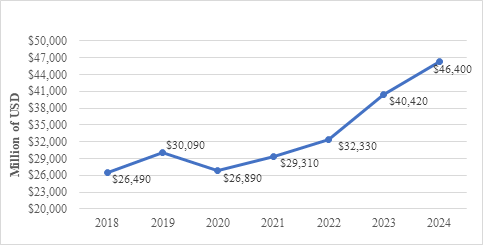
Source: Created by the authors with data from Mexican Ministry of Economy and Government of Canada (2025)
With respect to remittances, the amount of money sent from Canada to Mexico exceeded USD 1 billion in 2023 for the first time, a figure that, as illustrated in Figure 2, nearly doubled the amount received in 2018. It is worth noting that, despite this remarkable growth, remittances from Canada declined to approximately USD 698 million in 2024. Overall, the amount recorded in 2024 represented slightly more than 1% of all remittances received by Mexico from the rest of the world that year (Bank of Mexico, 2025).
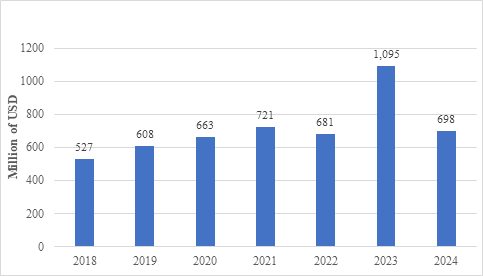
Source: Created by the authors with data from Mexican Ministry of Economy (2025)
Broadly speaking, although Mexico–Canada relations are less dynamic than the economic ties each country maintains with the United States (U.S.), the bilateral relationship has exhibited a positive upward trend across key economic indicators. Canada is Mexico’s third-largest trading partner, following only the U.S. and China. Within the context of negotiations for the new USMCA in 2026, both countries play a strategic role in counterbalancing U.S. hegemonic objectives in the region. In this context, in September 2025, the heads of government of both countries agreed to move forward with a Joint Action Plan for 2025–2028.
Perspectives of Canada and Mexico Relations
As part of the bilateral agenda between Mexico and Canada, Mexican President Claudia Sheinbaum and Prime Minister Mark Carney agreed to revitalize relations between the two countries. This new phase was described by both leaders as a strengthened “Comprehensive Strategic Partnership,” intended to expand bilateral cooperation into new areas beyond the traditional emphasis on economic affairs. The principles guiding this renewed bilateral phase were formalized in the Mexico–Canada Action Plan (2025–2028), signed on September 18, 2025 (El Economista, 2025).
The 2025–2028 Action Plan is structured around four pillars: (1) prosperity; (2) mobility, inclusion, and well-being; (3) security; and (4) environment and sustainability (Government of Mexico, 2025). Broadly speaking, the document seeks to expand cooperation beyond traditional economic and security relations to include the academic and cultural spheres, environmental protection, and the defense of Indigenous peoples in both countries. To this end, it delineates eighteen lines of action, several of which are formulated in light of current challenges faced by both countries in their bilateral relationship and, in particular, in their interactions with the United States, their principal partner within the framework of the North American strategic alliance.
In the economic sphere, both governments have identified the deepening of trade and investment as a priority. As noted in the previous section on economic relations, both countries have observed the considerable economic potential that exists, particularly in Mexico. Advancing in this area will require, without doubt, a transformation of both countries’ export profiles beyond the traditional automotive sector. Mexico holds significant potential in agricultural exports—such as tomatoes, avocados, and limes—while Canada has consolidated its position as one of the leading producers of wheat in the Saskatchewan region. Other sectors designated as priority areas include mining, port infrastructure, and large-scale infrastructure and innovation projects.
In the section on mobility, inclusion, and well-being, the Action Plan focuses primarily on the bilateral labor migration policies that both countries have successfully developed in recent years. In this regard, the Mexican side proposed building on previous progress and even considering the possibility of expanding the Mexican labor force employed in the Canadian agricultural sector. For its part, Canada expressed interest in increasing the number of its nationals traveling to Mexico, and facilitating the establishment of those who wish to reside there.
With respect to security, Prime Minister Carney and President Sheinbaum emphasized their interest in deepening cooperation on defense, particularly in matters related to drug trafficking networks and organized crime. Cybersecurity and the prevention and management of natural disasters were also identified as priority policy areas. Although any bilateral security strategy will almost certainly require the consent or participation of the United States, it is worth noting that both countries already share a common foundation on this issue stemming from the signing of the Mexico–Canada Defense Cooperation Agreement in 2018 (Government of Canada, 2018).
Finally, the comprehensive strategic partnership is complemented by a fourth pillar related to the environment and sustainability. In this regard, it is worth recalling that the Mexican president has extensive experience in designing and implementing public policies focused on energy transition and renewable energy, which prompted the Mexican side to advance the formulation of commitments in this area. Specifically, the Action Plan expresses both countries’ intention to move toward a shared environmental agenda in the near future.
Overall, the Mexico–Canada Action Plan (2025–2028) may represent a turning point in the bilateral relationship, fostering closer engagement between two of the principal partners in the North American region. Nonetheless, this relationship will continue to be conditioned by the presence of the third and dominant regional actor, the United States, which absorbs the largest share of trade and investment from both countries, as well as maintaining control and agency over regional security and defense matters.
Mexico and Canada share over 80 years of diplomatic relations, more than 30 years of free trade, and 20 years of cooperation under the framework of the Mexico–Canada Partnership Mexican government. The cooperation between the two countries will be elevated and consolidated into a comprehensive Mexico–Canada strategic partnership (Gobierno de México, 2025).
The Mexico–Canada Action Plan 2025–2028, which will serve as a roadmap for identifying priorities and guiding strategic actions in the bilateral relationship. The recent Mexico –Canada Action Plan is structured around four strategic pillars: prosperity; mobility, inclusion, and well-being; security; and environment and sustainability. This structure reflects shared priorities that will shape a resilient and dynamic bilateral relationship.
To support this strategic partnership, Mexico and Canada commit to frequent meetings and high-level communication, as well as exchanges between secretaries and ministers focused on the following strategic areas: foreign affairs, trade and investment, agriculture, energy, natural resources, finance, public security, and the environment, among others. In addition, an ongoing joint assessment process will be implemented to ensure progress toward the objectives established under the four pillars. Based on the Action Plan, the institutional framework of the Mexico–Canada Partnership will be expanded and strengthened as the primary mechanism for dialogue between the two countries (Gobierno de México, 2025).
Mexico and Canada will strengthen their long-standing bilateral relationship through a comprehensive strategic partnership grounded in four pillars: prosperity; mobility, inclusion, and well-being; security; and environment and sustainability. The Action Plan establishes mechanisms for high-level engagement, regular evaluation, and enhanced cooperation among ministries in priority sectors. Every pillar has a clear strategic objective and specific areas for cooperation. Finally, the also includes an implementation framework (Table 2). The first pillar, Prosperity, aims to advance a competitive, inclusive, and resilient North American economy. Its key actions are focused on deepening economic integration and security. This includes facilitating trade and expanding commercial links in strategic sectors, with particular support for Micro, Small, and Medium-sized Enterprises (MSMEs). The plan also seeks to promote reciprocal investment through enhanced public-private dialogue and to coordinate trade policies to maintain open markets and resilient supply chains. Furthermore, cooperation on economic security will be deepened, encompassing areas such as foreign investment screening and health security (Table 2).
The second pillar, Mobility, Inclusion, and Well-Being, is centered on reinforcing people-centered cooperation. Its initiatives are designed to manage human flows and improve societal welfare. This involves enhancing safe and regular migration pathways, building on existing frameworks like the Seasonal Agricultural Workers Program. The pillar also commits to promoting labor rights and strengthening institutions to ensure fair work environments. Additionally, it advances cooperation on public health—covering disease prevention, Indigenous health, and substance use—and supports Indigenous-led development in economic and educational spheres (Table 2).
The third pillar, Security, addresses shared challenges through joint action to combat threats to state and citizen safety. The key actions focus on combating transnational organized crime, including illicit trafficking of narcotics, firearms, and people, as well as money laundering. It also prioritizes enhancing cybersecurity cooperation to combat cybercrime and protect critical infrastructure. Another crucial area is institutional strengthening through training, intelligence sharing, and improving legal and extradition cooperation between the two countries (Table 2).
The fourth pillar, Environment and Sustainability, promotes bilateral cooperation on environmental stewardship and climate action. Key collaborative areas include enhancing the protection of natural areas and biodiversity, often through Indigenous-led conservation initiatives. The partners will also work together on climate mitigation and adaptation, with a focus on reducing methane emissions and sharing knowledge. Strengthening cooperation on renewable energy and clean energy transition is another central component of this pillar (Table 2).
Finally, the Implementation section outlines the mechanisms to ensure the plan's execution. It commits both nations to maintaining regular high-level engagement through structured ministerial dialogues and to conducting continuous joint evaluations to monitor progress across all pillars. A key element is the reinforcement of the Mexico–Canada Alliance as the primary institutional mechanism for steering this comprehensive bilateral dialogue and cooperation (Table 2).
Mark Carney said: “Canada and Mexico are entering a new era of cooperation. We are elevating our partnerships in trade, investment, energy and security to create more opportunity for Canadian workers, expanded markets for Canadian businesses, and more certainty for Canadian investors, while making North America the most competitive and dynamic economic region in the world” (Metal Service Center Institute, 2025). To support the new partnership, Carney announced $9.9 million in new funding, including $5.5 million for a United Nations-led project to support the integration of migrants and displaced people in Mexico and $4.4 million through the United Nations Office on Drugs and Crime and the Royal Canadian Mounted Police to bolster Mexico’s efforts to combat the trafficking of fentanyl and other synthetic opioids (Metal Service Center Institute, 2025).
| Pillar | Strategic Objective | Key Actions & Areas of Cooperation |
| I. Prosperity. | Advance a competitive, inclusive, and resilient North American economy. | • Facilitate trade, expand bilateral trade in strategic sectors, and support MSMEs. • Promote reciprocal investment and improve government-private sector dialogue. • Coordinate trade policy for open markets, regulatory cooperation, and supply chain resilience. • Deepen economic security cooperation (supply chains, investment screening, health security). |
| II. Mobility, Inclusion, and Well-Being. | Reinforce people-centered cooperation. | • Enhance safe, orderly, and regular migration (e.g., Seasonal Agricultural Workers Program). • Promote labor rights and institutional strengthening for fair and safe work. • Advance public health cooperation (disease prevention, Indigenous health, reproductive rights, substance use). • Support Indigenous-led development (economic empowerment, higher education, youth/women). |
| III. Security. | Address shared security challenges through joint action. | • Combat transnational organized crime (narcotics, firearms, human trafficking, money laundering). • Enhance cybersecurity cooperation (cybercrime, infrastructure protection, national resilience). • Strengthen institutions through training, intelligence sharing, and legal/extradition cooperation. |
| IV. Environment and Sustainability. | Promote environmental stewardship and climate action. | • Enhance cooperation on protected natural areas, biodiversity, and Indigenous-led conservation. • Advance climate mitigation and adaptation (methane reduction, transparency, knowledge exchange). • Strengthen energy cooperation. |
| Implementation | Ensure effective execution and monitoring of the Action Plan. | • Maintain regular high-level engagement and structured ministerial dialogues. • Conduct continuous joint evaluation of progress under each pillar. • Strengthen the Mexico–Canada Alliance as the lead mechanism for bilateral dialogue. |
Considering the abovementioned, there is a crucial moment in Mexico - Canada relations, characterized by a mutual effort to deepen their bilateral partnership in response to the unilateral economic pressures from the United States, during the initial months of the second Donald Trump administration (2025-2029). Both countries have reacted to the US tariffs, through bilateral diplomatic agreements in the face of a hegemonic power within an asymmetric regional integration framework. There are some areas in which both countries can foster their economic links.
The meeting between President Claudia Sheinbaum and Prime Minister Mark Carney, in mid-September 2025, marks a new period of strong collaboration, highlighting the shared vulnerability of both economies to the protectionist trade policy of the Trump administration, for example the sectoral tariffs affecting the Canadian steel at 50%, some Mexican pharmaceuticals at 25%, and the so-called “fentanyl tariff” (Yousif, 2025).
This realignment has overcome some frictions between the two nations taking place during the Justin Trudeau administration (2015-2025), and has resulted in a renewed alliance. The USMCA is set to be renegotiated in 2026, and the tacit objective is to avoid pitting countries against each other in the process. Preliminary consultations are already underway. This dynamic is a perfect example of the "subtle dance" that middle powers must perform in a trilateral system. They want to show unity and strengthen their collective bargaining position without making it seem like they're working together against the main power, whose market is still very important for both of them. The Mark Carney's statement: "we complement the United States" reflects this carefully constructed narrative framing bilateral cooperation as a regional public good that strengthens, not weakens, North America (Yousif, 2025).
Canada and Mexico have redefined the terms of their bilateral relationship traditionally subsumed under the framework of the USMCA. Both countries have an overwhelming economic dependence on the U.S. market and they have to deal with perceptions in Washington. The success of this initiative will be a key indicator of Mexico and Canada's capacity to exercise collective agency and shape a more resilient regional governance in an era of global trade instability.
The Canadian Chamber of Commerce, which was part of the delegation to Mexico in September 2025, welcomed the announcement, calling it an integral step towards realizing the untapped potential of the Canada-Mexico relationship. Catherine Fortin-LeFaivre, senior vice-president of international policy and global partnerships, said that as Canada diversifies its international trade, Mexico should be at the top of the list, and businesses on both sides must be ready to move. And also asserted: “Mexico is already in our top three trading partners, and we should be building on that. The Canadian Chamber will be taking a business delegation to Mexico in early February 2026 to turn this momentum into concrete opportunities” (Passafiume, 2025).
The Mexican president Claudia Sheinbaum mentioned that short-term work visas and expanding ocean trade routes between Canada and Mexico topped her priority agenda for meeting with Carney. Sheinbaum also highlighted that both countries agreed to keep work visas in place and that the countries’ labor ministries will continue to collaborate (Passafiume, 2025).
The Mexico – Canada action plan also comprises a trade mission to Mexico, led by Canada-U.S. Trade Minister Dominic LeBlanc. In this way, the federal government of Canada is planning a trade mission to Mexico in 2026, which will be focused on strategic sectors such as agriculture, advanced manufacturing, information technology, clean energy, and creative industries, with scheduled visits to diverse cities such as Mexico City, Monterrey, and Guadalajara (Passafiume and Robertson, 2025).
Despite trade tensions between Canada and the United States, Canadian Ambassador to Mexico Cameron MacKay underscores that Mexico remains committed to the trilateral agreement. He emphasizes that in this scenario, "Canada and Mexico will need each other more than ever," highlighting the necessity for close cooperation to solve common problems and defend a trade framework that has supported hundreds of thousands of jobs and enhanced continental competitiveness for over three decades (Barrera, 2025).
The economic foundations for this intensification of the relationship are solid and have been profoundly transformed by the free trade framework in place since 1994. Mexico is currently Canada's third-largest trading partner, with bilateral goods exchange reaching $56 billion Canadian dollars in 2024, a dramatic increase from less than $5 billion prior to NAFTA. Canadian direct investment in Mexico, which amounted to approximately $46.5 billion in 2024, is dominant in key sectors such as mining (70% of foreign direct investment) and the automotive industry, where over 60 Canadian auto parts companies employ about 30,000 Mexicans (Barrera, 2025).
Conclusion
Over the past three decades, the bilateral relationship between Mexico and Canada has evolved from a distant association into an increasingly strategic partnership. Accelerated by economic integration under NAFTA and USMCA and deepened by external geopolitical pressures, this relationship has been consolidated by the formulation of the Joint Action Plan 2025–2028 in September 2025. This plan is more than just another cooperation agenda; it recognizes that the bilateral partnership is a fundamental pillar of the prosperity of both nations within the North American context.
In recent history, both countries had prioritized their relations with the United States over those with each other. However, the current situation offers an opportunity for both countries to consolidate their relationship and move to a higher level of integration. This is precisely the spirit that motivated the signing of the Mexico-Canada Action Plan for 2025-2028. We can summarize various concluding points of this article.
First, the bilateral relationship has been reinforced by the implementation of specific programs. Mechanisms such as the Seasonal Agricultural Worker Program (SAWP), functioning since 1974, and the Mexico–Canada Partnership, established in 2004, demonstrate the commitment of both states to create enduring binational institutional frameworks of collaboration. The SAWP, in particular, is an international model of highly regulated circular labor migration, under an umbrella of legal and consular protection. This proclivity to institutionalize cooperation in key areas, such as human mobility, provides a foundation of trust upon which the new Action Plan is built.
Second, the economic analysis shows that they depend on each other in a different way.. Trade data from 2014 to 2024 show a growing trade deficit for Canada. This deficit is driven by the dynamism of Mexican manufacturing exports, particularly from the automotive sector, which is integrated into North American value chains. In contrast, Canadian foreign direct investment in Mexico, concentrated in mining, manufacturing, and services, reached an all-time high in 2024, indicating long-term commitment of Canadian investment to the Mexican economy.
The third important finding is the recognition of the bilateral relationship as an instrument for both countries to work together in the face of U.S. leadership. The political context of the second Trump administration (2025–2029), characterized by protectionism and unilateral tariffs, has forced closer coordination between Ottawa and Mexico City. The USMCA is going to be renegotiated in 2026. This creates a situation where both countries, as "middle powers" in the North American region, have a vital interest in working together. They should see this cooperation as a way to strengthen North America, not as a coalition against Washington.
Nevertheless, these advances face challenges. The overwhelming economic dependence of both countries on the U.S. market conditions any action perceived in Washington as a challenge to its leadership.
Finally, the Mexico-Canada Joint Action Plan 2025–2028 is an important step towards a complete and well-planned partnership. It represents the evolution of a relationship that advanced from a byproduct of NAFTA into a proactive bilateral partnership.
Organized around the pillars of Prosperity, Mobility, Security, and Sustainability, its architecture reflects a comprehensive understanding of 21st-century bilateral cooperation, transcending free trade and commerce to incorporate human well-being, collective security, and environmental sustainability.
In a world characterized by geoeconomic fragmentation and rivalry among major powers, strengthening this middle-power partnership is in the best interest of both Mexico and Canada. It is also a vital contribution to the stability, competitiveness, and regional governance of the entire North American region.
REFERENCES
1.

2.
3.
4.
5.
6.
7.
8.
9.
10.
11.
12.
13.
14.
15.
16.
17.
18.
19.