Parental Attachment, Empathy, and Peer Relationships in Korean Adolescents’ School Adjustment: A Conceptual Analysis Using Canadian Social and Emotional Learning Frameworks
Received: 2025-10-30 ; Accepted: 2025-12-10
Published Online: 2025-12-31
Abstract
Framed through a conceptual lens drawing on Canadian social and emotional learning (SEL) frameworks, this study examined whether family–peer socioemotional pathways—linking parental attachment, empathy, and peer relationships to school adjustment—are evident in a Korean adolescent sample. Using data from 511 students (Grades 7–9) in Seoul, structural equation modeling with bias-corrected bootstrap confidence intervals was conducted. Direct effects of parental attachment on school adjustment were not significant. Instead, maternal attachment predicted school adjustment indirectly via empathy and peer relationships, whereas paternal attachment did so indirectly via peer relationships only. These findings suggest that adolescents’ school adjustment is shaped primarily by socioemotional mediators—particularly empathy and the quality of peer relationships—rather than by direct parental influence. Viewed through a Canadian SEL lens, the family–peer pathways identified in this Korean sample echo themes in Canadian debates on SEL and school belonging and point to the value of relationship-centred pedagogy and strong family–school partnerships within Canadian SEL and school mental-health initiatives. Because the data come from a single cross-sectional Korean sample, we cannot draw firm causal or cross-national conclusions; a logical next step is to test the model with Canadian students so that the pathways can be compared empirically.
본문
Introduction
The transition to middle school constitutes a critical developmental period in which adolescents must adapt to a new physical environment while negotiating heightened social pressures and intra individual change (Park, 2024). School adjustment refers to a state in which students meet contextual demands, engage actively in academic tasks and social relationships, and maintain psychological well being (Ladd et al., 1997). Beyond academic attainment, school adjustment is regarded as a core indicator that predicts social competence, emotional well being, and peer relations across adolescence (Gilliam & Zigler, 2000; Kurt, 2022; Qin et al., 2022). Since the onset of the COVID 19 pandemic, several countries—including Korea and Canada—have reported increases in indicators of school maladjustment, including disrupted learning and reduced school belonging (Ministry of Education, Korea, 2023; Statistics Canada, 2022). Identifying the psychosocial mechanisms that promote school adjustment has therefore become a pressing priority across culturally diverse educational settings in Asia and Canada.
One key predictor of adolescents’ school adjustment is parental attachment. Attachment theory posits that secure attachment provides a secure base from which children explore their environments, thereby strengthening exploratory behavior and mastery motivation (Bowlby, 1988; Wang et al., 2013). Prior research shows that adolescents with secure relationships with parents demonstrate stronger social competence (Holt, 2014), heightened intrinsic motivation for learning, and greater classroom participation (Deci & Ryan, 2000). Across cultural contexts, parental attachment has been linked to higher self worth and social competence, which in turn promote school adjustment (Chen, 2017; Wang et al., 2023).
Empathy represents a central psychological mechanism that may connect parent–child relationships to school adjustment. Conceptualized as understanding and sharing another’s affective states (de Waal, 2012; Decety et al., 2016), empathy supports effective problem solving in peer conflict (Choi & Watanuki, 2014; de Wied et al., 2007; Yan et al., 2017). Low empathy, by contrast, is associated with peer difficulties and school maladjustment (Boele et al., 2019; Kim, 2025; Sunwoo & Choi, 2014), whereas higher empathy predicts stronger peer relations and better school adjustment—for example, greater social competence and fewer antisocial behaviors (Oh & Park, 2019; Qin et al., 2022).
Peer relationships constitute another robust predictor of school adjustment. Positive peer relations enhance satisfaction with school life, academic engagement, and emotional stability (Kurt, 2022; Zhang et al., 2022). Research with Japanese children similarly indicates that friendship quality improves enjoyment of school and adjustment (Honma & Uchiyama, 2014). Empathy and peer relationships are closely intertwined socioemotional factors (Zeng et al., 2025) and are linked in socioemotional pathways that predict stronger school adjustment (Oh & Park, 2019; Qin et al., 2022; Zhang & Deng, 2022). Related work also reports that parental attachment influences school adjustment through peer relationships (Zhang et al., 2022).
The strength and configuration of these family–peer socioemotional pathways may vary by cultural context. In Canada’s multicultural setting, Social and Emotional Learning (SEL) and school belonging are emphasized as key levers for academic engagement and psychological well being (Hymel et al., 2017; Willms, 2003). Approaches that integrate family–school connectedness and instruction targeting empathy and relationship skills have been advanced as educational strategies to foster inclusion and belonging (Adam, 2025; Falkenberg & Heringer, 2024; Hymel et al., 2017). Recent Canadian work has highlighted classroom practices such as “Co Active Coaching,” which integrates empathy, active listening, and self understanding as a practical model of SEL (Adam, 2025). This perspective aligns conceptually with the developmental pathway tested in the present study—linking parental attachment, empathy, and peer relationships to school adjustment—and resonates with empirical findings across diverse cultural contexts (Honma & Uchiyama, 2014; Oh & Park, 2019; Zhang & Deng, 2022; Zhang et al., 2022).
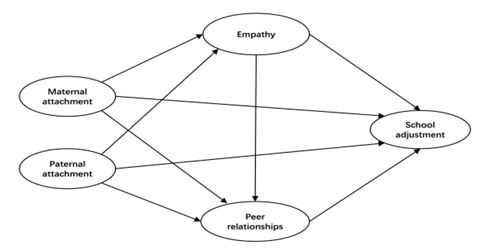
This study distinguishes maternal and paternal attachment and tests a structural model linking parental attachment to school adjustment through empathy and peer relationships among Korean middle-school students. Both parallel mediating effects—through empathy and through peer relationships—and the serial path from empathy to peer relationships are evaluated. The model is framed in relation to Canadian research and policy on SEL and school belonging, and cross-context implications are outlined for practices that strengthen family–school–peer linkages. The analyses draw solely on survey data from Korean middle-school students. Throughout the paper, Canadian SEL and school-belonging frameworks are used as conceptual and interpretive guides, not as direct sources of comparative empirical evidence.
Figure 1 presents the hypothesized model linking maternal and paternal attachment to school adjustment via empathy and peer relationships. This study addressed the following research questions (RQs):
RQ2. Do maternal and paternal attachment exhibit indirect effects on school adjustment via empathy and peer relationships?
RQ2a. (Parallel mediation). Are the separate indirect effects through empathy and through peer relationships statistically significant?
RQ2b. (Serial mediation). Is the indirect effect along the path from empathy to peer relationships statistically significant?
Literature Review
Attachment refers to a durable, stable emotional bond between an individual and significant others (Bowlby, 1969). Attachment theory posits that a secure parent–child relationship provides a secure base for exploration (Ma & Huebner, 2008), and that this affective security extends to the development of academic skills, interpersonal functioning, and social competence (Lin et al., 2014; Wang et al., 2005).
Prior work identifies parental attachment as a foundational context for empathy development. Chen et al. (2023) reported that emotional empathy partially mediated the association between maternal attachment and depressive symptoms and that the strength of associations differed by adolescents’ sex (stronger links with paternal attachment among boys and with maternal attachment among girls). A Korean study likewise found that maternal attachment exerted a stronger influence on empathy than paternal attachment (Park & Jung, 2024). However, many studies have treated parental attachment as a unitary construct rather than distinguishing maternal and paternal attachments (Knox et al., 2022; Li et al., 2021; Ştefan & Avram, 2018), a practice that can obscure potential differences by parent gender. To address this limitation, this study distinguishes maternal and paternal attachment and examines their distinct associations with adolescents’ empathy and peer relationships.
Parental attachment also plays a salient role in the formation and maintenance of peer relationships. A meta analysis showed that secure attachment to parents promotes the development of peer relations grounded in communication, support, intimacy, and trust (Delgado et al., 2022). Greater emotional support from parents is associated with more positive peer relationships (Llorca et al., 2017), which, in turn, predict adolescents’ social competence and school adjustment. Research with Canadian children further indicates that parental attachment is an important factor for maintaining peer relations (Therriault et al., 2024), suggesting cross cultural similarity in these processes.
In Canada, research on adolescent attachment and school adjustment has similarly emphasized relational competencies. For example, Gill et al. (2023) found that paternal attachment predicted emotional adjustment among Canadian undergraduates, whereas maternal attachment predicted academic adjustment. These findings highlight that, within Canadian contexts, emotional bonds within families contribute not only to well-being but also to students’ sense of belonging and engagement—core components of SEL frameworks. In a related sample of Canadian adolescents, Ratelle et al. (2017) reported that mothers’ autonomy support, involvement, and structure were associated with adolescents’ academic and personal–emotional adjustment, whereas fathers’ positive behaviors were primarily associated with academic adjustment. Taken together with Gill et al. (2023), these Canadian samples suggest that supportive parenting is linked to school adjustment—though patterns may vary by parent role and developmental stage.
Building on this evidence, parental attachment is also closely related to school adjustment (Wang et al., 2023; Zhang et al., 2022). For example, in longitudinal analyses, maternal attachment enhanced social competence, whereas paternal attachment reduced antisocial behavior (Wang et al., 2023). Adolescents with secure parental attachment also show higher levels of school adjustment overall (Zhang et al., 2022). Taken together, this literature supports the proposition that parental attachment may influence school adjustment indirectly through empathy and peer relationships, providing a theoretical basis for our model linking maternal and paternal attachment, empathy, peer relationships, and school adjustment.
Empathy is conceptualized as the capacity to understand another’s perspective and to share a corresponding affective response (Davis, 1996; Stewart et al., 2016). During adolescence, socioemotional development is shaped by interpersonal experiences that extend beyond the home, with peer relationships occupying a central role (Torres et al., 2015). Empathy functions as a core socioemotional competence that facilitates and sustains positive peer relations (Van Ryzin & Roseth, 2019), which in turn support adjustment to school.
Adolescents with higher empathy report greater trust and intimacy with peers as well as stronger perceptions of social support and acceptance (Boele et al., 2019; Niu et al., 2023; Van Ryzin & Roseth, 2022). A comparative study of Chinese and Canadian adolescents found that the effect of empathy on the quality of peer relationships varies by cultural context (Niu et al., 2023). Further, evidence from late-elementary students in Western Canada (Grades 4–5) indicates sex-differentiated patterns: emotional empathy was negatively associated with peer acceptance among boys but positively associated among girls, underscoring within-culture variation by age and gender (Oberle et al., 2010).
In Canada, the Social and Emotional Learning (SEL) literature links empathy and relationship skills to classroom engagement and to the cultivation of a safe and caring school climate (Hymel et al., 2017; Schonert Reichl, 2017), where empathy is framed as an integrated competence that includes perspective-taking and emotion understanding/regulation (Schonert-Reichl, 2017). Comparative work also indicates cross-cultural differences in how friendships are construed: Western samples (including Canada) tend to emphasize personal choice and intimacy, whereas East Asian samples more strongly foreground relational obligations and mutual care (Chen et al., 2004; Gummerum & Keller, 2008). Within this framework, empathy is treated as an integrated competence—combining perspective-taking with emotion understanding/regulation—that supports prosocial behavior and relationship skills in classrooms (Schonert-Reichl, 2017). A recent knowledge synthesis on Canadian K–12 education emphasizes the importance of relational and emotional approaches for fostering school belonging (Falkenberg & Heringer, 2024). Conceptually, these perspectives align with the pathway tested in the present study—from empathy to peer relationships and onward to school adjustment.
Empathy is robustly associated with peer relations. A meta analysis documented a consistent positive association between empathy and the quality of peer relationships, identifying empathy as a core socioemotional competence that promotes positive peer interactions (Boele et al., 2019). Empathy and peer relationships are also closely tied to school adjustment. By enabling students to understand and regulate emotions, empathy supports the formation of positive interpersonal relationships (Qin et al., 2022). In turn, these relational competencies promote academic engagement and satisfaction with school life. Evidence from Korea and other contexts consistently shows that higher empathy is associated with better school adjustment (Kim, 2025; Oh & Park, 2019; Park, 2024). This study examines whether a Canadian SEL/belonging pathway—linking empathy to peer relationships and onward to school adjustment—generalizes conceptually in a single-country East Asian context (Korea), thereby speaking to cross-context transferability.
Peer relationships provide essential social resources that help adolescents participate actively in school and maintain emotional stability. Prior studies show that higher-quality peer relationships are associated with better school adjustment—partly because friendships provide companionship, a secure base, and instrumental assistance for learning (Erath et al., 2008); peer relationships also function as a pathway linking parent–child attachment to school adjustment (Zhang et al., 2022). Receiving ample emotional support from friends is associated with higher levels of school adjustment (Erath et al., 2008; Lim & Lee, 2017), underscoring the role of peer relationships as a key socioemotional predictor of academic and social adaptation.
In the Canadian educational context, peer-related belonging and positive social relationships have been identified as central correlates of students’ engagement and emotional well-being. In PISA-based international analyses that include Canada, student engagement is conceptualized as comprising two related components—sense of belonging and participation—rather than as a single construct (Willms, 2003). Recent Canadian studies have further emphasized that supportive peer relations contribute to a caring school climate and protect against emotional difficulties among diverse student groups (Thomson et al., 2024). Taken together, these findings underscore that, within Canada’s SEL and school-belonging frameworks, peer relationships function not only as interpersonal assets but also as core mechanisms of school adjustment and inclusion.
Building on this evidence, we posit that affective bonds formed within families extend to peer relationships via empathy, such that the resulting social relational network functions as a primary psychosocial pathway to school adjustment. Guided by this literature, this study tests a structural model incorporating both parallel mediation and serial mediation (empathy → peer relationships) from parental attachment to school adjustment, providing an integrated account of adolescents’ socioemotional developmental pathways.
Social and Emotional Learning (SEL) refers to the process by which students recognize and regulate emotions, take others’ perspectives, build positive relationships, and make responsible decisions; these competencies develop progressively across the school years (Hymel et al., 2017). SEL provides a foundational framework for fostering social–emotional competence and mental well being and enables schools to integrate academic learning with socioemotional development.
In Canadian K–12 education, SEL and school belonging function as central pillars for academic engagement, emotional well being, and inclusive school culture. British Columbia embeds SEL as a core competency under Personal and Social Responsibility (Government of British Columbia, n.d.) and advances a safe, caring climate through province wide initiatives such as ERASE (Expect Respect and A Safe Education) (Government of British Columbia, n.d.; Government of British Columbia, 2025), the Heart Mind Index, and the SEL BC network (Hymel et al., 2017). Ontario, through School Mental Health Ontario (SMHO), provides a province wide framework that integrates universal SEL into daily instruction and strengthens collaboration among school boards, educators, and families (School Mental Health Ontario, 2024).
Teachers’ social–emotional competence and well being shape classroom climate, relationships, classroom management, and the fidelity of SEL implementation; conversely, teacher stress and burnout negatively affect students’ emotions, behavior, and engagement (Schonert Reichl, 2017). Using PISA data, Willms (2003) showed that school belonging—a psychological sense of being accepted, respected, and valued by peers and teachers—predicts students’ emotional well being and participation above and beyond academic achievement. School level factors, including fair discipline, positive teacher–student relationships, and high expectations, are positively associated with belonging and engagement.
Because SEL competencies such as emotion awareness and relationship skills develop through social interaction, the developmental pathway hypothesized in this study—from parental attachment, through empathy and peer relationships, to school adjustment—is conceptually aligned with core SEL principles. Empathy (social awareness) and relationship skills act as pivotal socioemotional capacities that connect peer relations to school participation and belonging (Schonert Reichl, 2017). Empathic, relationship centered engagement increases psychological safety and participation and, in turn, strengthens overall adjustment and a sense of belonging at school (Willms, 2003). Accordingly, the process whereby affective bonds with parents foster empathy that extends to peer relationships and ultimately to school adjustment can be understood as a socioemotional developmental pathway linking family, peer, and school systems. This perspective accords with empathy based, relationship centered principles embedded in Canadian SEL approaches and implementation frameworks.
Taken together, Canada’s SEL architecture—provincial policy, school based implementation, teacher capacity, and relationship oriented learning environments—maps conceptually onto the pathway articulated in this study (from parental attachment to empathy, to peer relationships, to school adjustment). This alignment underscores the importance of relational connectedness across family, peer, and school contexts in promoting adolescents’ social–emotional development and school adjustment.
Methods
This study included 570 students in Grades 7–9 enrolled at three public middle schools located in Seoul, Republic of Korea. After excluding 59 students with careless or incomplete responses, data from 511 students were retained for the final analyses. The final sample comprised 255 boys (49.9%) and 250 girls (48.9%), with 6 students not reporting gender (1.2%). By grade level, there were 193 seventh graders (37.8%), 162 eighth graders (31.7%), and 154 ninth graders (30.1%); two students did not report their grade (0.4%). The survey was conducted with administrative permission from each participating school and with the cooperation of classroom teachers. Participation was voluntary and anonymous, and no personally identifying information was collected.
Parental attachment was measured with the parent scale of the Inventory of Parent and Peer Attachment (IPPA; Armsden & Greenberg, 1987), using items adapted and validated for Korean adolescents by Yoo et al. (2010). Maternal and paternal attachment were assessed separately: the same item set was administered twice, once with “mother” and once with “father” as the referent. The scale consists of 25 items tapping three subdimensions—Communication (9 items), Trust (10 items), and Alienation (6 items). Example items include “I talk to my mother about my problems and troubles” (Communication), “My mother respects my feelings” (Trust), and “I often feel uncomfortable when I am with my mother” (Alienation). Responses were given on a 4-point Likert scale (1 = strongly disagree, 4 = strongly agree), with higher scores indicating stronger attachment to the parent named in the item. Internal consistency was high: for maternal attachment, Cronbach’s α was .846 (Communication), .897 (Trust), .809 (Alienation), and .935 (total), and for paternal attachment the corresponding coefficients were .872, .908, .867, and .947.
Empathy was measured using the Interpersonal Reactivity Index (IRI; Davis, 1983), employing items translated and adapted for middle-school students by Kim (1997). The instrument originally consists of 28 items forming two subdimensions: Cognitive Empathy (14 items) and Affective Empathy (14 items). Example items include “Before making a decision, I try to consider matters from the perspective of someone who disagrees with me” (Cognitive Empathy) and “Other people’s misfortunes do not usually disturb me a great deal” (Affective Empathy). All items were rated on a 5-point Likert scale (1 = strongly disagree, 5 = strongly agree), with higher scores reflecting greater empathy. Preliminary analyses indicated low item–total correlations for one item in each subdimension; these two items were removed. The final analysis thus used 26 items. Internal consistencies (Cronbach’s α) for the empathy scale were modest at .625 (Cognitive Empathy) and .645 (Affective Empathy), with .74 for the total scale. Consistent with common practice for two-indicator latent factors when subscales represent distinct facets, empathy was modeled as a latent construct with cognitive and affective indicators. Although subscale α values were modest (α=.625 and .645), latent modeling mitigates attenuation from measurement error; both indicators were retained based on theoretical distinctiveness and acceptable construct-level factor loadings and CR (see Table 2).
Peer relationships were assessed with seven items from the interpersonal satisfaction with friends domain of the Interpersonal Relationship Satisfaction Scale developed by Eun (1999) (7 items in total). A sample item is “I feel happy and enjoy the time I spend with my friends.” Items were rated on a 5-point Likert scale (1 = strongly disagree, 5 = strongly agree). Higher scores indicate better peer relationships. Internal consistency (Cronbach’s α) for the peer relationship scale was .743.
School adjustment was measured with the Teacher Rating Scale of School Adjustment (TRSSA; Birch & Ladd, 1997; Kim & Ahn, 2018), which was adapted to a student self-report format in this study. The 16-item instrument comprises four subdimensions: School Liking (4 items), School Avoidance (4 items, reverse-scored), Cooperative Participation (4 items), and Self-Directedness (4 items). Example items include “I like going to school” (School Liking), “I sometimes pretend to be sick so I can stay home from school.” (School Avoidance), “I generally take responsibility for assigned tasks” (Cooperative Participation), and “I tend to act on my own initiative” (Self-Directedness). All items were rated on a 5-point Likert scale (1 = strongly disagree, 5 = strongly agree). After reverse-scoring School Avoidance, higher scores reflected better school adjustment. In preliminary reliability testing, one Self-Directedness item showed a low item–total correlation and was excluded; the subscale was analyzed with three items, yielding 15 items overall. Cronbach’s α coefficients were .873 (School Liking), .810 (School Avoidance), .867 (Cooperative Participation), .695 (Self-Directedness), and .867 for the total scale.
Analyses proceeded in four steps. (1) To examine interrelations among maternal attachment, paternal attachment, empathy, peer relationships, and school adjustment, latent correlations were estimated. (2) Drawing on prior research, a structural equation model (SEM) was specified and estimated in AMOS 28.0. Before evaluating structural paths, the measurement model was assessed for reliability and validity using standardized factor loadings, average variance extracted (AVE), and composite reliability (CR). Convergent validity was considered adequate when loadings were ≥ .50, AVE ≥ .50, and CR ≥ .70 (Hair et al., 2010). Following Stevens (2002), loadings around .40 were treated as interpretable only in exceptional cases; such items were retained solely when theoretically essential and when scale level AVE/CR remained acceptable. (3) Model fit for both the measurement and structural models was evaluated using χ²/df, the Comparative Fit Index (CFI), the Tucker–Lewis Index (TLI), the Root Mean Square Error of Approximation (RMSEA), and the Standardized Root Mean Residual (SRMR). Values of CFI and TLI ≥ .90 indicated good fit; RMSEA ≤ .08 indicated acceptable fit (≤ .05 close fit); and SRMR ≤ .08 indicated acceptable fit (Byrne, 2001; Hair et al., 2010). (4) To test the mediating roles of empathy and peer relationships in the links between maternal/paternal attachment and school adjustment, bias corrected bootstrap procedures (5,000 resamples; 95% confidence intervals) were used, and phantom variables were employed to probe the significance of individual indirect effects.
Results
Latent correlations among maternal attachment, paternal attachment, empathy, peer relationships, and school adjustment are shown in Table 1 (N = 511). Maternal attachment was positively associated with paternal attachment (r = .631, p < .001), empathy (r = .340, p < .001), peer relationships (r = .476, p < .001), and school adjustment (r = .437, p < .001). Likewise, paternal attachment showed positive associations with empathy (r = .264, p < .001), peer relationships (r = .522, p < .001), and school adjustment (r = .449, p < .001). Empathy correlated positively with peer relationships (r = .263, p < .001) and with school adjustment (r = .476, p < .001). Peer relationships demonstrated a very strong positive correlation with school adjustment (r = .843, p < .001).
Assessment of univariate normality indicated that skewness values ranged from −0.868 to 0.043 (|2| criterion) and kurtosis values ranged from −0.069 to 1.555 (|7| criterion), meeting conventional thresholds for approximate normality (West et al., 1995).
| 1 | 2 | 3 | 4 | 5 | |
| 1. Maternal attachment 2. Paternal attachment 3. Empathy 4. Peer relationships 5. School adjustment | - .631*** .340*** .476*** .437*** | - .264*** .522*** .449*** | - .263*** .476*** | - .843*** | - |
| M | 3.131 | 3.009 | 3.270 | 3.898 | 3.865 |
| SD | .494 | .552 | .364 | .597 | .589 |
| Skewness | -.404 | -.400 | .043 | -.868 | -.675 |
| Kurtosis | -.069 | .164 | .796 | 1.335 | 1.555 |
Prior to estimating the structural paths among maternal attachment, paternal attachment, empathy, peer relationships, and school adjustment, the measurement model was evaluated using confirmatory factor analysis (CFA) (see Table 2). Overall fit was acceptable, χ²(64) = 254.067, p < .001, CFI = .944, TLI = .920, RMSEA = .076, and SRMR = .053, meeting commonly used benchmarks (CFI/TLI ≥ .90; RMSEA ≤ .08; SRMR ≤ .08; Hair et al., 2010) and indicating an adequate fit of the measurement model.
Convergent validity was examined using standardized factor loadings, average variance extracted (AVE), and composite reliability (CR). As summarized in Table 2, standardized loadings ranged from .456 to .938, AVE from .449 to .875, and CR from .733 to .954. Although the AVE for school adjustment (.449) fell slightly below the .50 criterion, convergent validity was deemed acceptable when considered jointly with the factor loadings and CR values, consistent with Hair et al. (2010). Items with standardized loadings ≥ .40 but < .50 were retained on theoretical grounds, given acceptable construct-level CR/AVE and adequate sample size (Stevens, 2002).
Specified with the same constraints and degrees of freedom as the measurement model, the structural model yielded identical global fit indices (χ²(64) = 254.067, p < .001, CFI = .944, TLI = .920, RMSEA = .076, and SRMR = .053). These indices satisfy commonly used cutoffs (CFI/TLI ≥ .90; RMSEA ≤ .08; SRMR ≤ .08; Hair et al., 2010). As summarized in Figure 2, maternal attachment positively predicted empathy (β = .289, p < .001) and peer relationships (β = .217, p < .01), whereas paternal attachment positively predicted peer relationships (β = .361, p < .001).
Both empathy (β = .282, p < .001) and peer relationships (β = .792, p < .001) positively predicted school adjustment, while the direct paths from maternal and paternal attachment to school adjustment were non significant. The model explained 12.0% of the variance in empathy, 31.6% in peer relationships, and 78.1% in school adjustment.
| Variables | Unstandardized Factor Loading | SE | C.R. | Standardized Factor Loading | AVE | Construct Reliability |
| Maternal attachment trust_MA communication_MA alienation_MA | 1.100*** 1.052*** 1.000 | .049 .048 | 22.378 21.819 | .926 .852 .723 | .875 | .954 |
| Paternal attachment trust_PA communication_PA alienation_PA | 1.025*** .958*** 1.000 | .041 .041 | 25.204 23.564 | .938 .839 .769 | .867 | .951 |
| Empathy emotional empathy cognitive empathy | .694*** 1.000 | .119 | 5.839 | .542 .773 | .812 | .894 |
| Peer relationships peer 2 peer 1 | .910*** 1.000 | .090 | 10.125 | .607 .670 | .580 | .733 |
| School adjustment self-directedness cooperative participation school avoidance school liking | .560*** .554*** .520*** 1.000 | .060 .053 .058 | 9.387 10.426 8.918 | .489 .547 .456 .800 | .449 | .756 |
| Acceptance Range1) | ≥1.965 | ≥.40 | ≥.50 | ≥.70 |
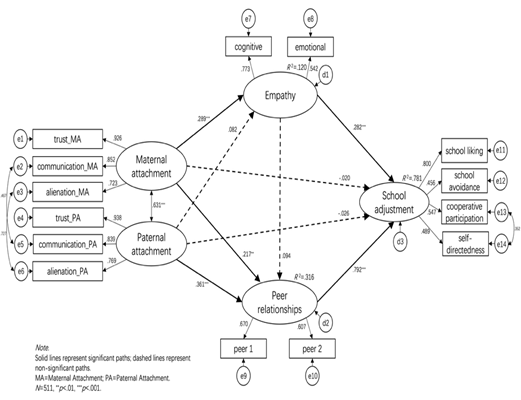
Direct and indirect effects were tested using bias-corrected (BC) bootstrap estimation with 95% confidence intervals (see Table 3). The direct paths from maternal and paternal attachment to school adjustment were not significant. By contrast, significant indirect effects emerged. Specifically, maternal attachment showed a positive indirect effect on school adjustment via empathy (B = .132, p < .01, 95% BC CI [.048, .272]) and via peer relationships (B = .278, p < .05, 95% BC CI [.052, .627]). These findings indicate that both empathy and peer relationships mediate the association between maternal attachment and school adjustment. In addition, paternal attachment exhibited a positive indirect effect on school adjustment through peer relationships (B = .390, p < .001, 95% BC CI [.199, .747]), confirming peer relationships as a mediator of the paternal attachment–school adjustment link.
| B | 95% CI | |||||
| Direct effects Maternal attachment Paternal attachment | → → | School adjustment School adjustment | -.032 -.036 | [-.386, .235] [-.369, .230] | ||
| Indirect effects Maternal attachment Maternal attachment Paternal attachment Paternal attachment Maternal attachment Paternal attachment | → → → → → → | Empathy Peer relationships Empathy Peer relationships Empathy → Peer relationships Empathy → Peer relationships | → → → → → → | School adjustment School adjustment School adjustment School adjustment School adjustment School adjustment | .132** .278* .031 .390*** .035 .008 | [.048, .272] [.052, .627] [-.028, .117] [.199, .747] [-.025, .133] [-.006, .061] |
Discussion
Using structural equation modeling (SEM), this study examined the pathways from maternal and paternal attachment to school adjustment through empathy and peer relationships among Korean middle-school students. The direct effects of parental attachment on school adjustment were not statistically significant. In contrast, significant indirect effects emerged: maternal attachment predicted school adjustment indirectly through empathy, and both maternal and paternal attachment predicted school adjustment indirectly through peer relationships. The sequential indirect pathway through empathy and then peer relationships was not supported. Taken together, these findings are conceptually consistent with Canadian SEL and school-belonging perspectives, suggesting cross-context implications whereby supportive peer relationships link empathy to school adjustment. In this study, we treated Canadian SEL and belonging frameworks as a conceptual lens when interpreting the Korean data, rather than as evidence from a comparative study.
Our findings indicate that parental attachment does not directly predict school adjustment; instead, it operates indirectly through socioemotional mediators—empathy and peer relationships. During adolescence, parents appear to shape school functioning primarily by supplying emotional security and socioemotional resources rather than exerting direct effects. Parents continue to provide a secure base (Allen et al., 2003; Bowlby, 1988), yet adolescents tend to realize social integration and belonging within peer contexts that function as a key secondary socialization environment (Erath et al., 2008; Zhang et al., 2022). This developmental shift toward peer centered relationships underscores the importance of the indirect route through which affective security established at home extends into social adaptation at school.
The mediating effect of empathy was significant only in the pathway from maternal attachment to school adjustment. Maternal emotional connectedness appears to nurture adolescents’ empathic capacities, including perspective taking and the formation of social trust (Decety et al., 2016), which in turn facilitate social interaction and emotional adjustment in school (Qin et al., 2022). Accordingly, maternal attachment operates less as a direct predictor and more as an indirect psychological mechanism that promotes school adjustment through gains in empathy. This interpretation is consistent with evidence that emotional intimacy within parent–child relationships fosters socioemotional competencies such as empathy and cooperation (Knox et al., 2022; Kochanska et al., 2005; Xu et al., 2022). Empathy during adolescence functions as a relational competence shaped by social experience (Wölfer, et al., 2012), and maternal sensitivity and warm, authoritative parenting are linked to stronger empathy development—though effects can vary by child temperament—thereby strengthening this competence (Kiang et al., 2004; Wagers & Kiel, 2019).
Peer relationships significantly mediated the associations of maternal and paternal attachment with school adjustment. This pattern suggests that affective security derived from parents enhances adolescents’ social skills and interpersonal trust, thereby facilitating the development of positive peer relationships. These relations function as a central social pathway to school adjustment (Zhang & Deng, 2022; Zhang et al., 2022), promoting satisfaction with school life, academic engagement, and feelings of belonging. Taken together, the findings provide empirical support for an indirect route whereby the parent–child emotional bond generalizes to peer relationships and, in turn, increases adolescents’ social participation and emotional well being at school.
These results underscore the family–peer–school social network of development as a core context for adolescent adaptation and align conceptually with Social and Emotional Learning (SEL) frameworks in multicultural settings such as Canada. Canadian SEL research has identified relational supports across family, school, and peer contexts as key predictors of school belonging and engagement (Falkenberg & Heringer, 2024; Hymel et al., 2017; Willms, 2003). Peer belonging and supportive school climates also operate as protective factors for early adolescents’ emotional adjustment (Thomson et al., 2024). Accordingly, the present findings, grounded in the experiences of Korean adolescents, offer comparative–conceptual insights for understanding both similarities and differences in socioemotional developmental pathways across Asian and Canadian contexts.
Canadian K–12 work on Social and Emotional Learning (SEL) and school belonging has consistently underscored the role of students’ relationships with peers and teachers (Hymel et al., 2017; Schonert-Reichl, 2017; Willms, 2003). The pathway identified in this Korean sample—from empathy to peer relationships and then to school adjustment—sits comfortably within this tradition, echoing the Canadian emphasis on relational competencies and a sense of belonging at school. Read alongside Canadian SEL studies, our findings point to family–peer–school connectedness as a shared socioemotional basis for student well-being. Canadian education systems can build on this foundation through culturally responsive SEL efforts that strengthen family–school partnerships and nurture supportive classroom climates. Provincial initiatives such as School Mental Health Ontario (2024) and British Columbia’s ERASE strategy (Government of British Columbia, 2025) already offer concrete structures for this kind of work.
National-level documents in Canada tell a similar story. The Council of Ministers of Education, Canada (CMEC, 2020) treats attitudes, skills, knowledge, and values as intertwined dimensions of learning in its Pan-Canadian Framework for Global Competencies, highlighting personal, interpersonal, and intercultural capacities that support well-being, equity, and inclusion. The Canadian Council on Learning (2008) likewise draws attention to emotional and social development—and to broader well-being and social cohesion—as core ingredients of successful learning. More recently, Falkenberg and Heringer (2024) have described a growing national focus on social-emotional competencies and school belonging across Canadian education systems. Taken together, these perspectives point to a Canadian commitment to weaving socioemotional learning through policy, curriculum, and school culture, with relational principles at the centre.
At both policy and practice levels, provincial frameworks in British Columbia and Ontario call for systematic classroom work on emotion recognition and regulation, empathy, and relationship skills. Seen through these frameworks, our results suggest several practical routes for enhancing school adjustment and belonging: designing lessons that explicitly foster empathy, integrating relationship-centred activities that promote cooperation and communication, and investing in family–school partnerships. Such strategies bolster the socioemotional mediators—empathy and relationship skills—that link emotional security at home to the quality of peer relationships and participation in class, and they resonate with initiatives such as British Columbia’s Mental Health in Schools strategy and classroom guidance from School Mental Health Ontario.
At the school level, collaboration with families can be strengthened through regular two-way communication, culturally responsive parent education and counselling, and family-engagement initiatives that explicitly recognize empathy and peer relations as key socioemotional routes to school adjustment.
At the classroom level, SEL can be woven systematically into everyday instruction. Teachers might address empathy, emotion regulation, cooperation, communication, and conflict resolution in a developmentally sequenced way, using relationship-centred strategies such as cooperative learning, restorative conversations, and peer mentoring. These practices can be aligned with provincial SEL and school-mental-health frameworks in British Columbia and Ontario.
At the family level, parent education can be positioned as a core component of adolescents’ social–emotional development, with attention to parental emotional sensitivity, empathic communication, emotion coaching, and support for managing peer conflict and digital or academic stress.
The sample was limited to Korean middle school students, which constrains generalizability of the findings. To support cross cultural inference, future research should establish measurement invariance across Korean and Canadian samples—configural, metric, and scalar—using multi group confirmatory factor analysis (CFA).
Although SEM supported the hypothesized pathways, the study relied on self reports and a cross sectional design, precluding strong causal inference and multi informant perspectives. Subsequent work should employ longitudinal designs, incorporate multi informant and multi source data (students, teachers, caregivers), and include observational indicators to strengthen validity for empathy and relational constructs.
Finally, the present analysis offered a comparative conceptual discussion rather than empirical testing with Canadian data. Validity in Canadian contexts should be evaluated by first establishing cross national measurement invariance and then comparing structural path coefficients (and means, where warranted). Researchers should also apply multilevel models (student, classroom, school) to examine whether contextual variation—such as school climate and provincial policies—modulates the magnitude and structure of the pathways.
Conclusion
This study showed that parental attachment was linked to school adjustment mainly through empathy and peer relationships rather than through direct effects. From a Canadian standpoint, the study illustrates how empathy and peer relationships can serve as bridges between family life and school, a theme that runs through Canadian SEL and school-belonging frameworks. Although our analyses are limited to Korean adolescents, the pathways identified here overlap with Canadian priorities such as relationship-centred pedagogy, empathy-oriented classroom practice, and close collaboration between families and schools. In this study, we draw on Canadian SEL and school-belonging frameworks as a conceptual lens for interpreting Korean students’ socioemotional development, rather than treating them as sources of comparative data. Future studies that apply similar measures to Canadian samples could test whether the same socioemotional routes to school adjustment appear across contexts and help to deepen dialogue between Asian and Canadian perspectives on SEL.
Statements and Declarations
Competing interests
The authors declare that they have no competing interests.
Ethical approval
At the time of data collection, a formal institutional ethics review was not sought. The survey was conducted with administrative permission from each participating school and with the cooperation of classroom teachers. Participation was voluntary and anonymous, and no personally identifying information was collected.
Data availability
Due to ethical restrictions involving minors and existing institutional agreements, the raw data are not publicly available. De-identified materials (codebook, item wording, and analysis code) are available from the corresponding author upon reasonable request.
REFERENCES
1.

2.
3.
4.
5.
7.
8.
9.
10.
11.
12.
13.
14.
15.
17.
18.
19.
20.
21.
22.
23.
24.
25.
26.
27.
28.
29.
30.
31.
32.
33.
34.
35.
36.
37.
38.
39.
40.
41.
42.
43.
44.
45.
46.
47.
48.
49.
50.
51.
52.
53.
54.
55.
56.
57.
58.
59.
60.
61.
62.
63.
64.
65.
66.
67.
68.
69.
70.
71.
72.
73.
74.
75.
76.
77.
78.
79.